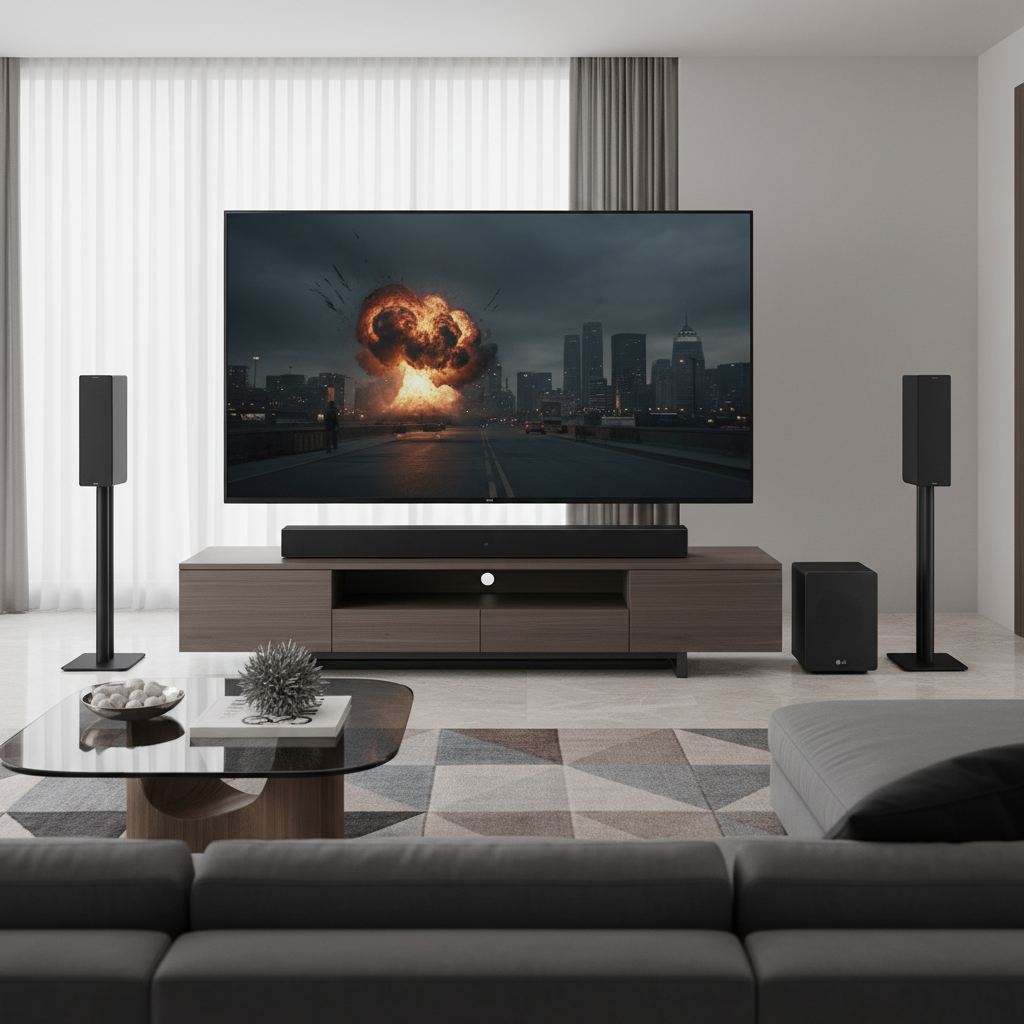
Elevating your home entertainment experience often begins with superior audio, and a soundbar is an excellent way to achieve this without complex setups. The convenience of wireless connectivity, specifically via Bluetooth, has made integrating a soundbar with your television simpler than ever. Say goodbye to tangled cables and hello to immersive sound that brings movies, music, and games to life. This comprehensive guide will walk you through the process of connecting your soundbar to your TV using Bluetooth, offer essential buying considerations, and provide effective troubleshooting tips to ensure a flawless audio experience.
Understanding Bluetooth-Enabled Soundbars
Modern soundbars come in various configurations, but nearly all contemporary models, regardless of their design, offer Bluetooth connectivity. This wireless technology allows for a clutter-free setup, transmitting audio signals from your TV to the soundbar without the need for physical cables.
Single Soundbars with Bluetooth
|
Our Picks for the Best Soundbar in 2026
As an Amazon Associate I earn from qualifying purchases.
|
||
| Num | Product | Action |
|---|---|---|
| 1 | Bose TV Speaker - Soundbar for TV with Bluetooth and HDMI-ARC Connectivity, All-in-One Compact Soundbar, Includes Remote Control, Black |

|
| 2 | ULTIMEA 5.1CH Surround Sound Bar with Subwoofer, Dolby Atmos, VoiceMX, BassMX, APP, 300W Soundbar for Smart TV, Home Theater Surround Sound System for TV, Bluetooth 5.4, Poseidon M60 (2026 Model) |
|
| 3 | ULTIMEA Sound Bar with Wireless Subwoofer, 240W Peak Power, VoiceMX & BassMX, App Control, 2.1ch Soundbar for Smart TV, Adjustable Bass, HDMI, Optical, Bluetooth 6.0, Poseidon M30 (2026 Model) |
|
| 4 | Amazon Fire TV Soundbar, 2.0 speaker with DTS Virtual:X and Dolby Audio, Bluetooth connectivity |
|
| 5 | ULTIMEA 2.1ch Surround Sound Bar for TV, Built-in Subwoofer, Peak Power 132W, App Control, 16 Inches Bluetooth 5.4 TV Speakers Soundbar, All-in-one PC Soundbar, Opt/AUX/Wall Mount, Poseidon M20 Pro |
|
| 6 | Sound Bar for Smart TV, Soundbar with Bluetooth/ARC/Opt/AUX Connect, Auto Volume Boost, 3 Equalizer Modes, 2 in 1 Detachable Soundbar for TV/PC/Gaming/Projectors |
|
| 7 | Sound Bar, 80W SoundBar for Smart TV, Bluetooth 5.3 Soundbars, 2 in 1 Detachable Home Speaker Bass Effect, Home Theater Surround Sound, ARC/Optical/AUX, for TV/PC/Gaming/Projectors (Deep Black) |
|
| 8 | Samsung B-Series Soundbar HW B400F 2.0 ch Soundbar with Built in Subwoofer (2025 Model) One Remote Control, Surround Sound Expansion, Voice Enhance Mode |
|
| 9 | Sony S100F 2.0ch Soundbar with Bass Reflex Speaker, Integrated Tweeter and Bluetooth, (HTS100F), easy setup, compact, home office use with clear sound black |
|
| 10 | Sonos Arc Ultra Soundbar with Dolby Atmos and Voice Control - 9.1.4 Surround Sound for TV and Music - Black |
|
A single soundbar is an all-in-one unit designed to deliver enhanced audio without additional components. They are compact, making them ideal for smaller spaces or minimalist setups. Their integrated Bluetooth functionality means you can easily pair them with your TV for a straightforward wireless audio upgrade. While they may not offer the expansive soundstage of multi-component systems, their simplicity and improved audio quality over built-in TV speakers are significant advantages.
Soundbars with Wireless Subwoofer (Bluetooth Capable)
Many soundbars are bundled with a dedicated wireless subwoofer, significantly boosting bass performance. In these setups, the subwoofer typically connects wirelessly to the main soundbar unit, while the soundbar itself handles the Bluetooth connection to your TV. This configuration provides a more dynamic and impactful audio experience, especially for action movies and bass-heavy music, all while maintaining a wireless link to your television. The independent placement of the subwoofer also offers greater flexibility in your room layout.
Multi-channel Soundbars (2.1, 3.1, 5.1, 7.1 with Bluetooth)
Multi-channel soundbars aim to replicate a surround sound experience with a single bar and, often, additional satellite speakers. Configurations like 2.1, 3.1, 5.1, or even 7.1 refer to the number of audio channels and subwoofers they possess. For these systems, the primary soundbar unit still connects to your TV via Bluetooth, while any accompanying rear speakers or subwoofers connect wirelessly to the soundbar itself. This delivers a more immersive soundscape, making you feel more engaged with the on-screen action, all built around the core wireless link to your television.
Key Factors for Bluetooth Soundbar Connectivity
When considering a soundbar for Bluetooth connectivity, several factors play a crucial role in your overall experience. Understanding these can help you make an informed decision and optimize your setup.
Sound Quality and Codecs
While Bluetooth offers unparalleled convenience, sound quality can vary depending on the Bluetooth version and the audio codecs supported by both your soundbar and TV. Newer Bluetooth versions (e.g., 5.0, 5.2) provide more stable connections and greater range. Advanced codecs like aptX, aptX HD, or LDAC can transmit higher-resolution audio, offering a richer and more detailed sound profile than the standard SBC codec. Always check if both your devices support these codecs for the best possible wireless audio.
Compatibility
The most fundamental aspect is ensuring both your television and soundbar are equipped with Bluetooth capabilities. While most modern smart TVs and soundbars feature Bluetooth, it’s always wise to verify the specifications. Additionally, some TVs have specific Bluetooth profiles or modes designed for audio output, which may influence pairing ease and functionality. Older TVs might require an external Bluetooth transmitter.
Size and Design
Though not directly related to Bluetooth connectivity, the physical attributes of your soundbar are important for integration into your living space. Consider the soundbar’s length in relation to your TV’s width and the available space on your TV stand or wall. Aesthetically, choose a design that complements your TV and home décor, ensuring it enhances, rather than detracts from, your entertainment area.
Connecting Your Soundbar to TV via Bluetooth: A Step-by-Step Guide
Connecting your soundbar to your TV wirelessly through Bluetooth is a straightforward process that typically takes just a few minutes. Follow these general steps for a seamless setup experience.
Preparing Your Soundbar
First, ensure your soundbar is powered on and placed in its desired location, ideally close to your TV. Next, you need to activate its Bluetooth pairing mode. This usually involves pressing a dedicated “Bluetooth” button on the soundbar itself or its remote control. Look for an indicator light that starts blinking, or a display that shows “BT PAIRING” or “PAIRING” to confirm it’s ready to connect. If you’re unsure, consult your soundbar’s user manual for specific instructions.
Pairing with Your TV
With your soundbar in pairing mode, turn your attention to your television. Using your TV remote, navigate to the settings menu. This is often accessed by pressing a “Home” button, a “Settings” button (often represented by a gear icon), or similar. Within the settings, look for “Sound,” “Audio Output,” or “Speakers.” Select this option, then choose “Bluetooth Speaker List,” “Bluetooth Audio Device,” or “Add Device” to put your TV into searching mode. Your TV will then scan for nearby Bluetooth devices. Once your soundbar’s name appears on the list of available devices, select it and confirm the pairing. A confirmation message on your TV screen or soundbar display should indicate a successful connection.
Adjusting Audio Settings
After successful pairing, it’s crucial to ensure your TV’s audio output is correctly routed to the soundbar. In your TV’s sound settings, confirm that the soundbar is selected as the primary audio output device. You can then adjust the volume using either your TV remote or the soundbar’s remote. In some cases, sound might initially play from both the TV’s internal speakers and the soundbar simultaneously. If this occurs, navigate back to your TV’s sound settings and look for an option to disable the internal speakers or a “Multi-output Audio” setting, which you should deactivate.
Troubleshooting Common Bluetooth Connection Issues
Even with the simplicity of Bluetooth, you might occasionally encounter connection problems. Here are some common issues and their solutions to help you restore your wireless audio.
Soundbar Not Appearing in TV List
If your soundbar isn’t showing up when your TV scans for devices, try power cycling both units. Unplug the TV and the soundbar from their power outlets, wait about 30 seconds, then plug them back in and restart the pairing process. Ensure the soundbar is actively in Bluetooth pairing mode and not already connected to another device like a smartphone. Also, try moving the soundbar closer to the TV and reducing potential interference from other wireless devices like Wi-Fi routers or cordless phones.
Connection Drops or Instability
Bluetooth connections can sometimes be intermittent due to various factors. Interference from other electronics or physical obstacles between the soundbar and TV can disrupt the signal. Try repositioning your devices to ensure a clear line of sight. Outdated firmware on either your TV or soundbar can also lead to instability; check the manufacturer’s website for any available software updates. If the issue persists, “forgetting” the soundbar from your TV’s Bluetooth device list and then re-pairing it can often resolve the problem.
Sound Playing from Both TV and Soundbar
This common occurrence means your TV’s internal speakers are still active alongside your soundbar. To fix this, access your TV’s sound settings, navigate to the audio output options, and look for a setting to disable internal speakers or adjust “Multi-output Audio.” On some Samsung TVs, for instance, you might find this under Accessibility settings, where you can deactivate Multi-output Audio. This ensures all sound is exclusively routed through your soundbar.
General Tips
Always refer to the user manuals for both your specific TV and soundbar models, as steps can vary slightly between brands. When troubleshooting, a simple restart can often clear temporary glitches. If your TV lacks built-in Bluetooth, consider purchasing a Bluetooth audio transmitter that plugs into your TV’s optical or RCA audio output.
Choosing the Right Bluetooth Soundbar for Your TV
Selecting the ideal Bluetooth soundbar involves more than just knowing how to connect it. It’s about finding a device that perfectly aligns with your entertainment preferences and living space.
Determine Your Usage Needs
Consider what you’ll primarily use the soundbar for. If movies and dynamic content are a priority, a soundbar with a wireless subwoofer for enhanced bass might be suitable. For mainly dialogue-driven TV shows or casual music listening, a simpler single soundbar might suffice. Also, assess your room size and acoustics; larger rooms might benefit from more powerful systems.
Set Your Budget
Soundbars are available across a wide price spectrum. Define a budget range that you’re comfortable with, and then explore options within that category. Remember that higher-priced models often offer more advanced Bluetooth codecs, better build quality, and additional features, but excellent entry-level and mid-range options are also available for effective wireless TV audio.
Research and Compare Features
Beyond Bluetooth capability, look into other features like HDMI ARC/eARC for potential future wired connections, virtual surround sound technologies, and easy-to-use remote controls or companion apps. Read user reviews and expert assessments to gauge real-world performance and reliability, especially concerning Bluetooth stability and sound quality.
Purchase and Setup
Once you’ve made your decision, purchase from a reputable retailer. Upon bringing your new soundbar home, follow the manufacturer’s specific setup instructions, which may include firmware updates. After connecting via Bluetooth, test various types of content to ensure optimal sound delivery and make any final adjustments to your TV’s audio settings.
Comparison of Leading Soundbar Features for Bluetooth Connectivity
To help you navigate the soundbar market, here’s a general comparison of features commonly found in Bluetooth-enabled soundbars, categorized by their typical performance and price points.
| Feature | Basic Bluetooth Soundbars | Advanced Bluetooth Soundbars |
|---|---|---|
| Bluetooth Version | Often 4.2 or older | Typically 5.0, 5.2, or newer |
| Audio Codec Support | Standard SBC | SBC, AAC, aptX, aptX HD, LDAC for high-fidelity audio |
| Ease of Pairing | Manual button press for pairing | One-touch pairing, app-controlled setup, automatic re-pairing |
| Multi-Device Connectivity | Usually pairs with one device at a time | May support multi-point pairing or seamless switching |
| Wireless Performance | Sufficient for close range, moderate interference risk | Enhanced range and stability, more resilient to interference |
| Price Point | Accessible entry-level to mid-range | Mid-range to premium, offering superior features |
Conclusion
Connecting your soundbar to your TV via Bluetooth unlocks a world of wireless audio convenience, transforming your home viewing and listening experience with minimal effort. By understanding the straightforward pairing process, considering key features like Bluetooth codecs, and knowing how to troubleshoot common issues, you can easily set up and enjoy enhanced sound. This wireless freedom allows for cleaner aesthetics and flexible soundbar placement, making it an ideal choice for modern living rooms. Elevate your audio, simplify your setup, and immerse yourself in superior sound today!
What’s your favorite aspect of having a wireless soundbar setup?
Frequently Asked Questions
Can I connect any soundbar to any TV via Bluetooth?
While most modern TVs and soundbars support Bluetooth, compatibility is key. Both devices need to have Bluetooth functionality, and you should ensure your TV supports Bluetooth audio output. Always check the specifications and manuals for both devices.
Why does my Bluetooth soundbar keep disconnecting?
Interference from other wireless devices, physical obstructions, or being too far from the TV can cause disconnections. Outdated firmware or having the soundbar simultaneously connected to another device can also be culprits. Try power cycling both devices, reducing interference, and checking for software updates.
Does Bluetooth affect sound quality significantly?
Bluetooth compresses audio, which can slightly reduce sound quality compared to wired connections like HDMI ARC/eARC or optical. However, with newer Bluetooth versions (e.g., 5.0+) and advanced audio codecs like aptX or LDAC, the difference is often negligible for most listeners, providing excellent quality for wireless convenience.
How do I know if my soundbar is in pairing mode?
Most soundbars indicate pairing mode with a blinking LED light, a specific message on their display (e.g., “BT PAIRING” or “PAIRING”), or an audible prompt. Refer to your soundbar’s user manual for the precise indicator for your model.
What if my TV doesn’t have Bluetooth?
If your TV lacks built-in Bluetooth, you can use a Bluetooth audio transmitter. These small devices plug into your TV’s audio output ports (like optical or RCA) and convert the audio signal into a Bluetooth signal, allowing you to wirelessly connect to your soundbar.