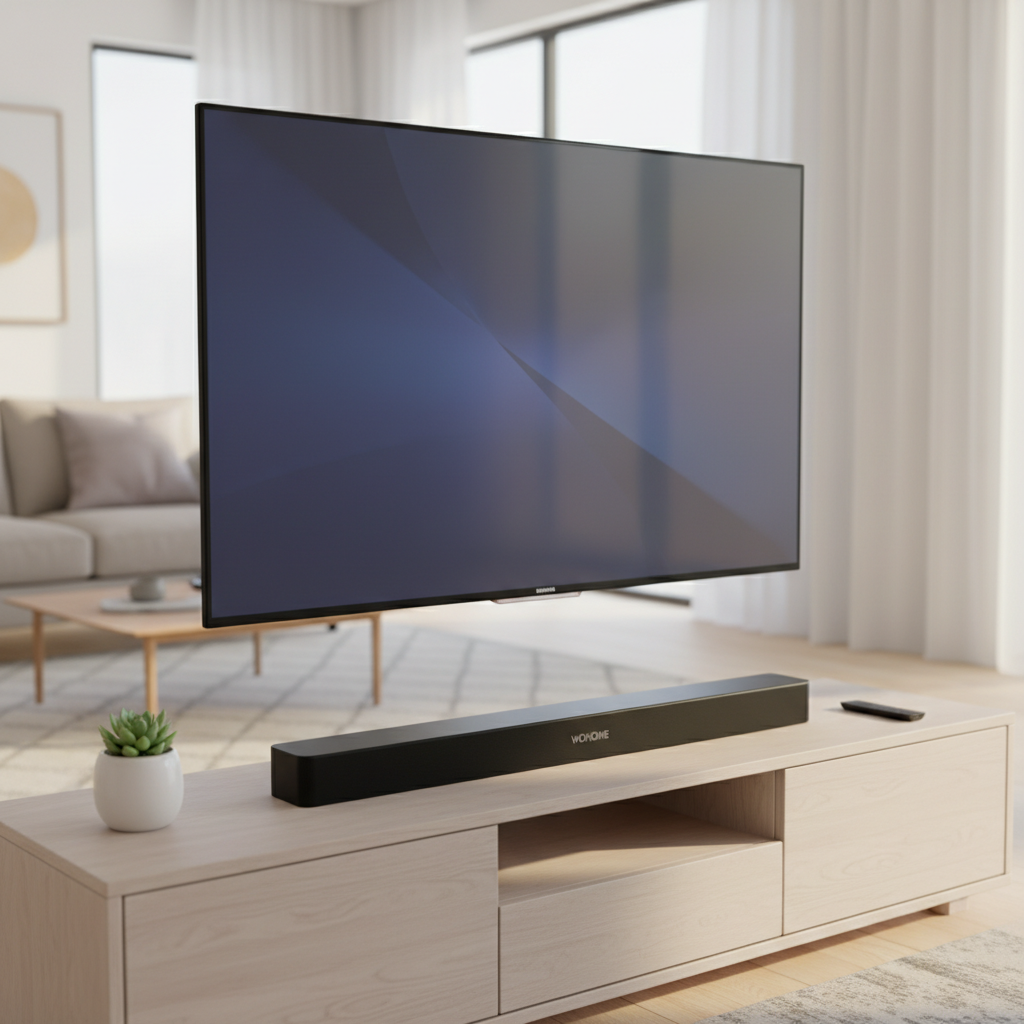
There’s nothing quite like settling down for a movie or an intense gaming session, only to have the experience shattered by a frustrating disconnect between what you see and what you hear. When dialogue doesn’t match the speaker’s lips, or explosions lag behind the on-screen action, it’s known as a lip sync issue or audio delay. This common problem, often encountered when using a soundbar with your television, can transform an immersive home entertainment setup into an annoying distraction. Fortunately, most audio delay problems are fixable with a bit of troubleshooting and adjustment. This comprehensive guide will walk you through understanding the root causes and applying practical solutions to restore perfect harmony between your soundbar and TV, ensuring your audio and visuals are always in perfect sync.
Understanding Lip Sync Issues: What Causes Audio-Visual Delay?
Audio-visual synchronization, or “lip sync,” is a delicate balance in any home theater system. When sound and picture signals travel through multiple devices, each performing its own processing, even tiny discrepancies in timing can lead to noticeable delays. These milliseconds of lag accumulate, resulting in the irritating experience where dialogue precedes or follows the on-screen mouth movements. Identifying the source of this delay is the first crucial step towards a seamless viewing experience.
The Science Behind the Stutter: Why Does it Happen?
|
Our Picks for the Best Soundbar in 2026
As an Amazon Associate I earn from qualifying purchases.
|
||
| Num | Product | Action |
|---|---|---|
| 1 | Sonos Arc Ultra Soundbar with Dolby Atmos and Voice Control - 9.1.4 Surround Sound for TV and Music - Black |

|
| 2 | Sony S100F 2.0ch Soundbar with Bass Reflex Speaker, Integrated Tweeter and Bluetooth, (HTS100F), easy setup, compact, home office use with clear sound black |
|
| 3 | ULTIMEA 5.1CH Surround Sound Bar with Subwoofer, Dolby Atmos, VoiceMX, BassMX, APP, 300W Soundbar for Smart TV, Home Theater Surround Sound System for TV, Bluetooth 5.4, Poseidon M60 (2026 Model) |
|
| 4 | ULTIMEA 2.1ch Surround Sound Bar for TV, Built-in Subwoofer, Peak Power 132W, App Control, 16 Inches Bluetooth 5.4 TV Speakers Soundbar, All-in-one PC Soundbar, Opt/AUX/Wall Mount, Poseidon M20 Pro |
|
| 5 | Sound Bar, 80W SoundBar for Smart TV, Bluetooth 5.3 Soundbars, 2 in 1 Detachable Home Speaker Bass Effect, Home Theater Surround Sound, ARC/Optical/AUX, for TV/PC/Gaming/Projectors (Deep Black) |
|
| 6 | Samsung B-Series Soundbar HW B400F 2.0 ch Soundbar with Built in Subwoofer (2025 Model) One Remote Control, Surround Sound Expansion, Voice Enhance Mode |
|
| 7 | Bose TV Speaker - Soundbar for TV with Bluetooth and HDMI-ARC Connectivity, All-in-One Compact Soundbar, Includes Remote Control, Black |
|
| 8 | Sound Bar for Smart TV, Soundbar with Bluetooth/ARC/Opt/AUX Connect, Auto Volume Boost, 3 Equalizer Modes, 2 in 1 Detachable Soundbar for TV/PC/Gaming/Projectors |
|
| 9 | ULTIMEA Sound Bar with Wireless Subwoofer, 240W Peak Power, VoiceMX & BassMX, App Control, 2.1ch Soundbar for Smart TV, Adjustable Bass, HDMI, Optical, Bluetooth 6.0, Poseidon M30 (2026 Model) |
|
| 10 | Amazon Fire TV Soundbar, 2.0 speaker with DTS Virtual:X and Dolby Audio, Bluetooth connectivity |
|
At its core, audio delay stems from the way your television and soundbar process signals. When you watch content, whether from a streaming service, a Blu-ray player, or live TV, the audio is often encoded in complex formats like Dolby Digital, DTS, or Dolby Atmos. Both your TV and soundbar must decode these formats to play the sound. This “number-crunching” takes time, typically milliseconds. If the TV processes the video and the soundbar processes the audio independently, and one finishes before the other, a desynchronization occurs. Higher bitrate audio formats often require more processing time, exacerbating the delay.
Common Culprits: From Cables to Processing Power
Several factors can contribute to lip sync issues, ranging from physical connections to internal device settings. Understanding these common culprits helps narrow down the cause and target your troubleshooting efforts effectively.
HDMI ARC/eARC and Connection Quality
While HDMI ARC (Audio Return Channel) and its enhanced successor, eARC, are designed to simplify connections and improve audio quality, they can still be sources of delay. If the HDMI cable connecting your TV and soundbar is faulty, low-quality, or not certified for ARC/eARC, it can hinder proper signal transmission. Even with optimal cables, the communication handoff between the TV and soundbar can sometimes introduce latency.
Signal Processing Overload in TVs and Soundbars
Modern TVs and soundbars boast numerous features designed to enhance picture and sound. However, these processing effects—such as motion smoothing on your TV or virtual surround sound, dialogue enhancers, and specialized sound modes (like “Movie” or “Sports”) on your soundbar—all require additional processing time. The more “enhancements” enabled, the greater the potential for accumulating delays, pushing audio and video out of alignment.
The Role of External Devices and Wireless Connections
Lip sync issues aren’t always solely the fault of your TV or soundbar. External devices like streaming sticks (e.g., Firestick, Roku, Chromecast), cable boxes, or gaming consoles can introduce their own processing delays before the signal even reaches your television. Furthermore, wireless connections, particularly Bluetooth, are inherently prone to latency. While convenient, Bluetooth may not be suitable for critical audio-visual synchronization due due to its transmission characteristics. Even Wi-Fi-based audio, if experiencing interference or a weak signal, can contribute to delays.
Your Troubleshooting Toolkit: Step-by-Step Solutions
Once you understand the potential causes, you can systematically address them. This section provides a structured approach to troubleshooting, moving from simple checks to more advanced configurations, helping you restore perfect lip sync.
The Foundation: Initial Checks and Easy Fixes
Before diving deep into settings menus, start with these quick and often effective solutions. They can resolve many common synchronization problems without complex adjustments.
Power Cycling Your Home Entertainment System
One of the simplest yet most effective troubleshooting steps is a complete power cycle. Just like a computer, electronic devices can develop temporary glitches that are resolved by a full restart. Turn off your TV, soundbar, and any other connected source devices (like a cable box or streaming player). Unplug them all from the wall outlet. Wait for at least 60 seconds to ensure all residual power is drained, then plug everything back in and power them on. Test the audio sync again.
Verifying Cable Connections and Quality
Loose or damaged cables are a frequent, overlooked cause of audio issues. Ensure all HDMI, optical, or other audio cables connecting your TV and soundbar are securely plugged into their respective ports. If you’re using HDMI ARC/eARC, confirm the cable is inserted into the specifically labeled ARC/eARC port on both your TV and soundbar. Consider replacing older or generic cables with high-speed, certified HDMI cables, especially if you’re experiencing persistent problems. Optical cables, while reliable, can sometimes introduce more latency than HDMI.
The Importance of Firmware Updates
Manufacturers regularly release firmware updates for TVs and soundbars to improve performance, add features, and fix bugs—including those related to audio synchronization. Check both your TV and soundbar for available software or firmware updates. This is usually done through the device’s settings menu (often under “Support” or “System”) or by visiting the manufacturer’s website and downloading the update to a USB drive. Keeping your devices current can often resolve underlying compatibility or processing issues.
Identifying the Source: Testing Different Inputs
To determine if the lip sync issue is universal or specific to certain content, test various audio sources. Try a different streaming app, switch to a Blu-ray player, or watch regular broadcast TV. If the delay only occurs with one specific app or device, the problem likely lies with that particular source or its connection. This diagnostic step helps focus your troubleshooting efforts.
Fine-Tuning Your Television’s Audio Settings
Your television plays a central role in managing audio signals. Adjusting its settings is often key to resolving lip sync issues, especially when the soundbar is connected via HDMI ARC or optical.
Navigating TV Audio Output Formats (PCM vs. Bitstream)
Many TVs allow you to choose how digital audio is sent to an external device. You’ll typically find this in your TV’s audio settings under “Digital Audio Output” or “SPDIF Output.” The options usually include PCM (Pulse Code Modulation) and Bitstream (or Dolby Digital/DTS/Passthrough). Bitstream formats require the soundbar to decode the audio, which can introduce delay. Switching your TV’s audio output to PCM forces the TV to decode the audio before sending a simpler, uncompressed signal to the soundbar. This can significantly reduce latency and often resolves lip sync problems. However, be aware that using PCM might limit your ability to enjoy advanced multi-channel audio formats like Dolby Atmos if your TV cannot pass them as PCM.
Utilizing Your TV’s Audio Delay/Lip Sync Adjustment
Most modern TVs have a built-in “Audio Sync,” “Lip Sync,” or “Audio Delay” setting, usually located within the sound or expert settings menu. This feature allows you to manually adjust the audio timing in milliseconds to match the video. While playing content with clear dialogue, slowly increase or decrease the delay value.
- If the audio is behind the video (you see lips move before you hear the sound), you need to add delay to the audio, allowing the video to catch up.
- If the audio is ahead of the video (you hear the sound before the lips move), you need to reduce the delay.
Start with small increments (e.g., 10-20 milliseconds) until synchronization is achieved. Note that some TVs only allow you to delay the audio further, which isn’t helpful if your audio is already delayed.
Deactivating Unnecessary Audio and Video Enhancements
As discussed, additional processing introduces delay. Go into your TV’s picture settings and disable any “motion smoothing,” “motion interpolation,” or similar features that artificially make video look smoother. These can add significant video processing delay. Similarly, in your soundbar’s settings, turn off any “virtual surround,” “dialogue enhancement,” or “volume leveling” features. Switching to a “Direct” or “Standard” sound mode on your soundbar, which applies minimal processing, can also significantly reduce lag. If your TV has a “Game Mode,” enabling it typically reduces picture processing latency, which can help synchronize with the audio output.
Optimizing Your Soundbar’s Performance
Beyond TV settings, your soundbar itself offers options to fine-tune audio synchronization. These adjustments work in conjunction with your TV’s settings to achieve the best possible sync.
Exploring Soundbar-Specific Audio Delay Controls
Many soundbars, particularly higher-end models, include their own “Audio Sync” or “Lip Sync” adjustment features. These settings are usually accessible via the soundbar’s remote control or a dedicated mobile app. Much like with your TV, you can adjust the delay in milliseconds. Experiment with these settings while observing the on-screen action to find the perfect balance. Adjustments on the soundbar often complement or fine-tune what you’ve set on your TV.
Experimenting with Sound Modes and Presets
Soundbars frequently come with various sound modes like “Movie,” “Music,” “Sports,” or “Standard.” While these modes are designed to optimize audio for different content, some, particularly those that heavily process sound for virtual surround effects, can introduce latency. Try switching your soundbar to a “Direct,” “Standard,” or “Bypass” mode that minimizes additional audio processing. This can often resolve delays caused by complex sound enhancements.
The Last Resort: Resetting Your Soundbar
If all other troubleshooting steps fail, performing a factory reset on your soundbar can sometimes resolve persistent lip sync issues. This will revert all settings to their original defaults, eliminating any conflicting configurations or software glitches that might be causing the delay. Refer to your soundbar’s user manual for specific instructions on how to perform a factory reset, as the process varies by model and manufacturer. You may also consider resetting your TV’s audio settings to default.
Advanced Strategies for Stubborn Sync Problems
For those rare but frustrating instances where standard troubleshooting doesn’t yield results, a few advanced strategies might be necessary. These often involve altering your setup or introducing additional hardware.
Bypassing the TV: Connecting Sources Directly to the Soundbar
If your soundbar has HDMI input ports (other than the ARC/eARC output to the TV), consider connecting your primary source device—such as a Blu-ray player, gaming console, or streaming box—directly to the soundbar instead of the TV. This allows the soundbar to process the audio first and then pass the video signal through to the TV. This setup can sometimes bypass processing conflicts within the TV that are causing the delay, leading to improved synchronization.
Considering an External Audio Delay Processor
In extreme cases, where no amount of setting adjustment resolves the lip sync issue, a dedicated external audio delay processor can be an option. These devices are inserted between your audio source and your soundbar, allowing for precise, granular control over audio timing. They are less common for typical home users but can be a lifesaver for complex setups or unique hardware incompatibilities.
When the Fix Isn’t Simple: Recognizing Deeper Issues
While most lip sync problems are solvable, there are rare instances where the issue might stem from inherent hardware limitations or deeper software incompatibilities. It’s important to recognize when you’ve exhausted common solutions.
Hardware Limitations and Compatibility
Older TVs or soundbars, particularly those without HDMI ARC/eARC or robust audio delay adjustment features, might simply lack the processing power or internal synchronization mechanisms to achieve perfect lip sync with certain advanced audio formats or complex setups. Sometimes, specific device pairings might also have inherent compatibility quirks that are difficult to overcome.
Seeking Professional or Manufacturer Support
If you’ve diligently followed all troubleshooting steps and still experience noticeable lip sync issues, it might be time to reach out for professional help. Contact the customer support for your TV or soundbar manufacturer. They may have specific insights, advanced troubleshooting steps, or be aware of known issues with your particular models. Providing them with a detailed description of your setup and the steps you’ve already taken will greatly assist them in diagnosing the problem.
Expert Insights on Achieving Perfect Audio-Visual Harmony
“Achieving perfect lip sync often involves a delicate dance between your TV’s processing and your soundbar’s capabilities. Sometimes, the simplest solution is the most effective, like a quick reboot, while other times it demands a deeper dive into your settings.” – Allan Devantier, VP of Audio R&D at Samsung.
Understanding how audio and video signals are processed and transmitted is key to mastering your home entertainment setup. While lip sync issues can be frustrating, most are solvable by systematically checking connections, updating software, and adjusting settings on your TV and soundbar.
Conclusion: Reclaiming Your Immersive Home Entertainment
A perfectly synchronized audio-visual experience is fundamental to truly enjoying your movies, shows, and games. Lip sync issues, though common, do not have to be a permanent fixture in your home entertainment system. By systematically troubleshooting the causes, from power cycling and cable checks to adjusting advanced TV and soundbar settings, you can almost always restore the seamless harmony between sound and picture. Remember the power of PCM, the importance of disabling unnecessary processing, and the fine-tuning capabilities of audio delay sliders. With patience and these proven techniques, you’ll reclaim the immersive experience your soundbar was designed to deliver, ensuring every word and every sound effect lands exactly when it should. What’s the most challenging lip sync issue you’ve ever tackled in your home setup?
Frequently Asked Questions
Why does my soundbar have lip sync issues but my TV speakers don’t?
Lip sync issues primarily arise when an external audio device like a soundbar is introduced because the TV and soundbar each perform their own processing on the audio and video signals. When using only TV speakers, the TV handles both processes internally, allowing it to easily coordinate the timing. The separate processing paths for external devices can lead to tiny, cumulative delays that cause desynchronization.
Can Wi-Fi interference cause lip sync problems with a soundbar?
Yes, if your soundbar or source devices are connected wirelessly (especially over Wi-Fi for multi-room audio systems), Wi-Fi interference can potentially cause lip sync problems. A weak or congested Wi-Fi signal can lead to dropped packets or increased latency in audio transmission, making the sound fall out of sync with the video. Ensuring a strong, stable Wi-Fi connection and minimizing interference from other devices is crucial.
Is HDMI eARC better for preventing lip sync issues than ARC?
Yes, HDMI eARC (enhanced Audio Return Channel) generally offers better performance in preventing lip sync issues compared to standard HDMI ARC. eARC provides significantly higher bandwidth, allowing it to transmit uncompressed, high-resolution audio formats like Dolby Atmos and DTS:X with less latency. This enhanced capability often results in more stable and synchronized audio-visual playback, especially with complex audio signals.
How do I know if my soundbar or my TV is causing the delay?
To determine if the TV or soundbar is causing the delay, connect an audio source (like a Blu-ray player) directly to the TV and listen through the TV’s internal speakers; if there’s no delay, the TV is likely not the primary cause. Then, connect the soundbar and test different TV inputs and audio formats (PCM vs. Bitstream). If adjusting the TV’s audio delay affects the sync, the TV’s processing might be the culprit, whereas if only soundbar settings make a difference, the soundbar is more likely.
What is the ideal audio delay setting for a soundbar?
There is no single “ideal” audio delay setting for a soundbar, as it depends entirely on your specific TV, soundbar, and source devices. The correct setting is the one that achieves perfect synchronization for your unique setup. You’ll need to adjust the audio delay (typically in milliseconds) incrementally while watching content with clear dialogue until the sound perfectly aligns with the on-screen action, which could range from 0ms to over 200ms.