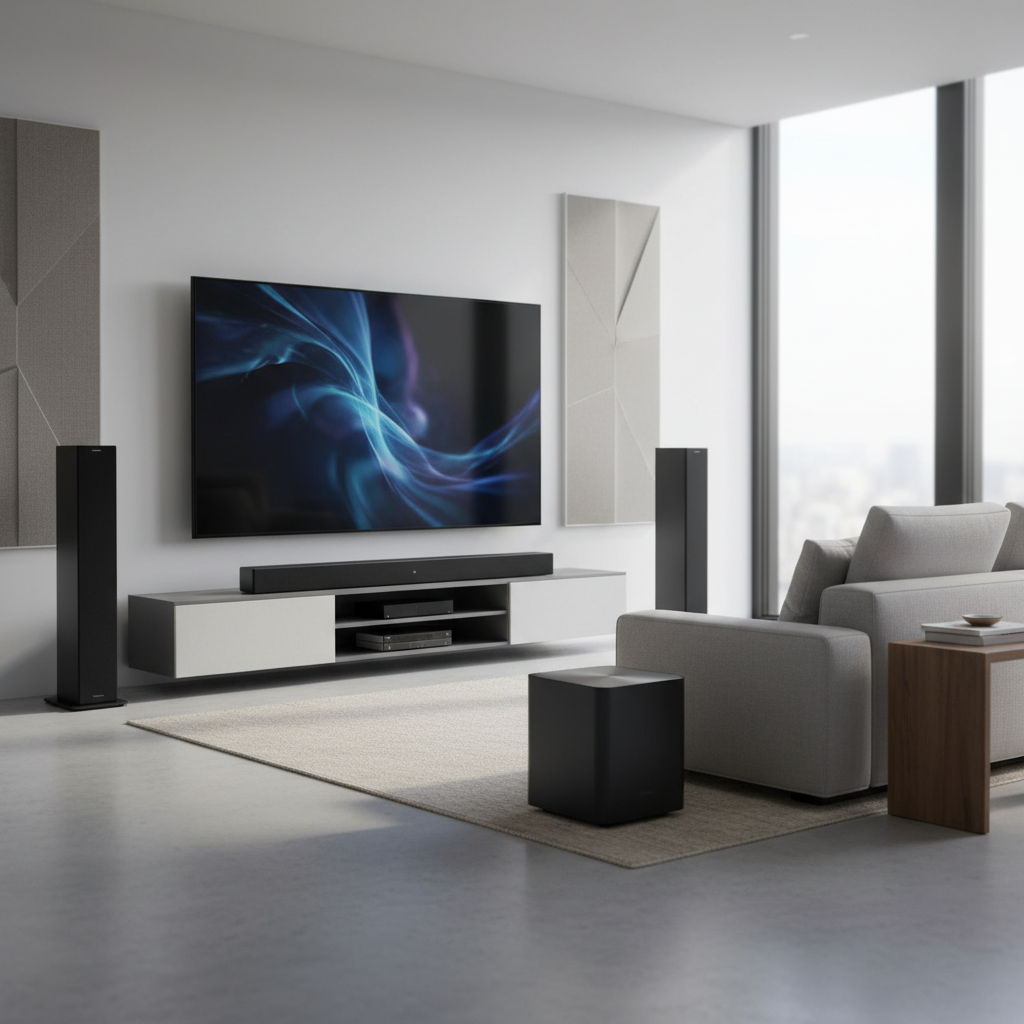
Ever settled down for movie night, only to find your supposedly spectacular surround sound system delivering a less-than-stellar audio experience? You’re not alone. Ensuring every speaker is working correctly and calibrated for optimal performance is crucial for true cinematic immersion. Fortunately, YouTube, often overlooked as a surround sound testing tool, can be a surprisingly effective resource to diagnose and fine-tune your setup. With a few simple steps and the right videos, you can transform your home audio from simply adequate to truly captivating.
Understanding Surround Sound Basics
|
Our Picks for the Best Soundbar in 2026
As an Amazon Associate I earn from qualifying purchases.
|
||
| Num | Product | Action |
|---|---|---|
| 1 | Sound Bar, 80W SoundBar for Smart TV, Bluetooth 5.3 Soundbars, 2 in 1 Detachable Home Speaker Bass Effect, Home Theater Surround Sound, ARC/Optical/AUX, for TV/PC/Gaming/Projectors (Deep Black) |

|
| 2 | Sound Bar for Smart TV, Soundbar with Bluetooth/ARC/Opt/AUX Connect, Auto Volume Boost, 3 Equalizer Modes, 2 in 1 Detachable Soundbar for TV/PC/Gaming/Projectors |
|
| 3 | Sonos Arc Ultra Soundbar with Dolby Atmos and Voice Control - 9.1.4 Surround Sound for TV and Music - Black |
|
| 4 | Amazon Fire TV Soundbar, 2.0 speaker with DTS Virtual:X and Dolby Audio, Bluetooth connectivity |
|
| 5 | Sony S100F 2.0ch Soundbar with Bass Reflex Speaker, Integrated Tweeter and Bluetooth, (HTS100F), easy setup, compact, home office use with clear sound black |
|
| 6 | Samsung B-Series Soundbar HW B400F 2.0 ch Soundbar with Built in Subwoofer (2025 Model) One Remote Control, Surround Sound Expansion, Voice Enhance Mode |
|
| 7 | ULTIMEA Sound Bar with Wireless Subwoofer, 240W Peak Power, VoiceMX & BassMX, App Control, 2.1ch Soundbar for Smart TV, Adjustable Bass, HDMI, Optical, Bluetooth 6.0, Poseidon M30 (2026 Model) |
|
| 8 | Bose TV Speaker - Soundbar for TV with Bluetooth and HDMI-ARC Connectivity, All-in-One Compact Soundbar, Includes Remote Control, Black |
|
| 9 | ULTIMEA 2.1ch Surround Sound Bar for TV, Built-in Subwoofer, Peak Power 132W, App Control, 16 Inches Bluetooth 5.4 TV Speakers Soundbar, All-in-one PC Soundbar, Opt/AUX/Wall Mount, Poseidon M20 Pro |
|
| 10 | ULTIMEA 5.1CH Surround Sound Bar with Subwoofer, Dolby Atmos, VoiceMX, BassMX, APP, 300W Soundbar for Smart TV, Home Theater Surround Sound System for TV, Bluetooth 5.4, Poseidon M60 (2026 Model) |
|
Before diving into testing, it’s essential to grasp the fundamentals of surround sound. A typical surround sound setup, like a 5.1 system, involves five main audio channels and one subwoofer channel. These usually include a front left, center, front right, surround left, and surround right speaker, plus a dedicated low-frequency effects (LFE) channel for deep bass handled by the subwoofer. More advanced systems like 7.1 add two rear surround speakers, enhancing the spatial audio field. The magic of surround sound lies in its ability to place distinct sounds in specific locations around you, creating a three-dimensional soundscape that pulls you into the action. Testing ensures each of these channels is delivering audio as intended, crucial for accurate directional effects and overall soundstage cohesion.
Preparing Your System for Testing
To get the most accurate results from your YouTube surround sound test, some preliminary checks are necessary.
First, ensure all your speakers are physically connected correctly to your AV receiver or soundbar. Double-check that wires are securely fastened and that positive and negative terminals match between the speaker and the amplifier. Next, confirm your AV receiver or soundbar is set to the appropriate input and is decoding a surround sound format. Many modern systems offer auto-calibration features (like Audyssey or MCACC); running these first can provide a good baseline, though manual fine-tuning might still be desired.
A critical point to remember is YouTube’s specific surround sound capabilities. While YouTube offers 5.1 surround sound, it’s primarily supported on dedicated streaming devices and Smart TVs, including models from 2021 onwards, Chromecast, Apple TV, Roku, Fire TV devices, and game consoles like Xbox Series S|X, Xbox One, and PlayStation 5 [cite: 5_troubleshooting_5]. You’ll typically find less consistent 5.1 support when using YouTube on a web browser on a PC. Ensure your TV or streaming device’s audio output settings are configured to pass through surround sound (e.g., Bitstream or Auto) to your receiver or soundbar, rather than downmixing to stereo. For YouTube TV, there’s often a specific 5.1 toggle in the app’s settings that should be enabled [cite: 3_troubleshooting_5].
Finding the Right YouTube Test Videos
YouTube hosts a wealth of excellent resources for testing surround sound. Look for channels dedicated to home theater testing, such as “5.1 Test & Clips” or “Surround Lab,” which offer a variety of diagnostic tools [cite: 1_youtube_test_surround, 2_best_youtube_5.1].
Channel Identification Tests
These are fundamental. These videos typically play a specific sound or voice prompt through each speaker individually (Front Left, Center, Front Right, Surround Left, Surround Right, LFE/Subwoofer) [cite: 1_youtube_5.1_test]. This allows you to verify that each speaker is working, connected to the correct channel, and positioned properly relative to your listening position. What to look for:
- Does the audio come from the speaker identified on screen?
- Is the volume level consistent across all channels (excluding the LFE/subwoofer)?
Speaker Phase Tests
While less common, some advanced test videos also include phase checks. Speaker phasing refers to whether the speaker cone moves inward or outward in sync with other speakers. If a speaker is out of phase (often due to incorrect wiring), it can lead to thin, distorted, or spatially inaccurate sound. Listen for any noticeable cancellation or unnatural sound from a specific speaker during these tests.
Immersive Audio Demos
Once basic functionality is confirmed, immerse yourself in demonstration videos featuring dynamic soundscapes or action scenes. These types of videos are designed to showcase the immersive qualities of surround sound, with sounds panning seamlessly between channels. Look for content with:
- Environmental sounds: Rainstorms, forests, or bustling city scenes can highlight how well your system creates a convincing atmosphere [cite: 3_youtube_test_surround].
- Action sequences: Explosions, vehicle movements, or flying objects provide excellent opportunities to assess directional accuracy and the fluidity of sound transitions across your speakers [cite: 3_youtube_test_surround].
Frequency Response and Bass Tests
Dedicated frequency sweep videos or bass tests can help you evaluate your system’s range, from deep lows handled by the LFE channel to clear highs. Pay close attention to the subwoofer to ensure it’s producing powerful, articulate bass without being boomy or muddy [cite: 5_youtube_test_surround, 4_best_youtube_5.1]. These tests are vital for confirming that your LFE channel is actively engaged and properly integrated with your other speakers.
Step-by-Step Guide: Testing Your Surround Sound with YouTube
- Connect and Configure: Ensure your TV or streaming device is correctly connected to your AV receiver or soundbar, preferably via HDMI ARC/eARC. Verify that your TV’s audio output settings are set to “Pass-through” or “Bitstream” to allow your receiver to decode the surround sound signal.
- Access YouTube: Open the YouTube app on your supported Smart TV or streaming device.
- Search for Test Videos: Use the search bar to find relevant videos. Good search terms include “5.1 surround sound test,” “Dolby Digital test,” or “speaker placement test.” Channels like “5.1 Test & Clips” and “Surround Lab” are excellent starting points.
- Perform Channel Identification: Start with a channel identification test. As each speaker is highlighted, confirm that the sound is coming from the correct physical speaker. Adjust your receiver’s individual speaker levels if one channel sounds significantly louder or softer than the others.
- Check Phase (If Available): If your chosen video includes a phase test, carefully listen for any anomalies that might indicate miswired speakers.
- Evaluate Immersion: Play immersive demo content. Close your eyes and try to pinpoint the origin of sounds. Do they move smoothly from one speaker to the next? Is the overall sound field cohesive?
- Test Bass Response: Use a dedicated LFE or bass test to ensure your subwoofer is firing properly and integrated seamlessly, providing a foundation for your audio without overpowering the other channels.
- Fine-Tune: Based on your observations, make small adjustments to speaker placement, angle, and individual channel levels on your receiver.
“A well-calibrated surround sound system isn’t just about loudness; it’s about precision. Every sound should have its rightful place, contributing to an enveloping experience that mirrors reality.” – Admin, reviewkw.com, Audio Technician with 10+ Years of Expertise
Common Troubleshooting Tips
Even with the right videos, you might encounter issues. Here’s how to address common problems:
- No Sound from Specific Speakers:
- Wiring: Re-check all speaker wires. A loose connection or reversed polarity (positive/negative) is a frequent culprit.
- Receiver Settings: Ensure your receiver is set to the correct speaker configuration (e.g., 5.1, 7.1) and that individual channels haven’t been accidentally muted or set to extremely low volumes.
- YouTube Output: Remember that YouTube’s 5.1 support is device-dependent. If you’re on a PC, you might only get stereo.
- Muted Subwoofer (LFE Channel Issues):
- LFE Level: Verify the subwoofer’s level on your receiver or soundbar.
- Crossover Settings: Ensure your receiver’s crossover frequency is set correctly, directing low frequencies to the subwoofer.
- YouTube Limitations: Some users report LFE channel issues with certain YouTube content or devices [cite: 1_youtube_test_surround]. Try different test videos or content.
- General Lack of Surround Effect:
- Source Audio: Confirm the YouTube video you’re playing actually has a 5.1 soundtrack. Not all content on YouTube is encoded in surround sound.
- Device Settings: Double-check your TV/streaming device audio output and YouTube app settings (e.g., the 5.1 toggle for YouTube TV) [cite: 3_troubleshooting_5].
- Receiver Decoding: Ensure your AV receiver is actively decoding a surround sound format, indicated by a “Dolby Digital” or “DTS” light on its display, rather than just “Stereo.”
- Outdated Drivers (for PC setups): While PCs aren’t ideal for YouTube 5.1, if you’re testing other PC-based surround sound, ensure your audio drivers are up-to-date. You can typically find this in Device Manager on Windows [cite: 2_troubleshooting_5, 4_troubleshooting_5]. Running Windows’ built-in audio troubleshooters can also help diagnose software-related issues [cite: 4_troubleshooting_5].
Maximizing Your Surround Sound Experience Beyond Testing
Testing with YouTube is an excellent starting point, but a truly optimized surround sound experience involves more. Utilize your AV receiver’s auto-calibration system if it has one; these systems use a microphone to analyze your room acoustics and automatically adjust speaker levels, distances, and equalization. For the best quality surround sound content, consider sources like Blu-ray discs or premium streaming services (Netflix, Disney+, HBO Max) that consistently offer robust 5.1 or even Dolby Atmos/DTS:X soundtracks. These dedicated sources often provide a more reliable and higher-fidelity surround sound experience than YouTube, perfect for enjoying your newly calibrated system.
Conclusion
Testing your surround sound system with YouTube is a straightforward and effective way to ensure every component of your home theater is working in harmony. By utilizing channel identification, phase checks, and immersive audio demos, you can quickly diagnose common issues and fine-tune your setup for optimal performance. A well-configured system not only enhances your viewing experience but also ensures you’re getting the most out of your audio equipment. So, power up your system, queue up those test videos, and prepare to unlock the full potential of your home audio. What’s your favorite way to put your surround sound to the test?
Frequently Asked Questions
Can I really get true 5.1 surround sound from YouTube?
Yes, YouTube supports 5.1 surround sound, but primarily on specific devices. You’ll typically experience true 5.1 on Smart TVs (2021 models and later), streaming sticks like Chromecast, Roku, and Fire TV, and gaming consoles such as Xbox and PlayStation [cite: 5_troubleshooting_5]. Support for 5.1 audio is generally not consistent when streaming YouTube through a web browser on a PC.
How do I enable 5.1 surround sound on the YouTube TV app?
To enable 5.1 surround sound on the YouTube TV app, simply navigate to the app’s settings. Within the audio settings, you should find a toggle option to turn 5.1 surround sound on or off [cite: 3_troubleshooting_5]. If you’re experiencing issues, toggling it off and then back on can sometimes resolve connectivity problems.
What should I listen for when testing my surround sound speakers?
When testing, pay close attention to several key elements. First, verify that sound is coming from the correct speaker (front left, center, front right, surround left, surround right, and subwoofer). Listen for clarity in dialogue from the center channel, balanced volume across all speakers, and smooth, distinct directional effects as sounds move around the room. Ensure your subwoofer provides deep, controlled bass without muddiness [cite: 5_youtube_test_surround].
Why is my subwoofer not working during a YouTube surround sound test?
If your subwoofer isn’t working during a YouTube test, first check its physical connection and power. Then, ensure the LFE (low-frequency effects) channel is enabled and properly configured on your AV receiver or soundbar. Also, be aware that some users report inconsistent LFE output from YouTube, particularly on certain devices or with specific content. Trying different test videos can help determine if it’s a content-specific issue [cite: 1_youtube_test_surround].
Are there specific YouTube channels recommended for surround sound tests?
Absolutely! Channels like “5.1 Test & Clips” and “Surround Lab” are highly recommended for comprehensive surround sound testing [cite: 1_youtube_test_surround, 2_best_youtube_5.1]. They offer a range of videos, including individual speaker checks, phase tests, and immersive audio demonstrations designed to help you calibrate and evaluate your home theater system effectively.