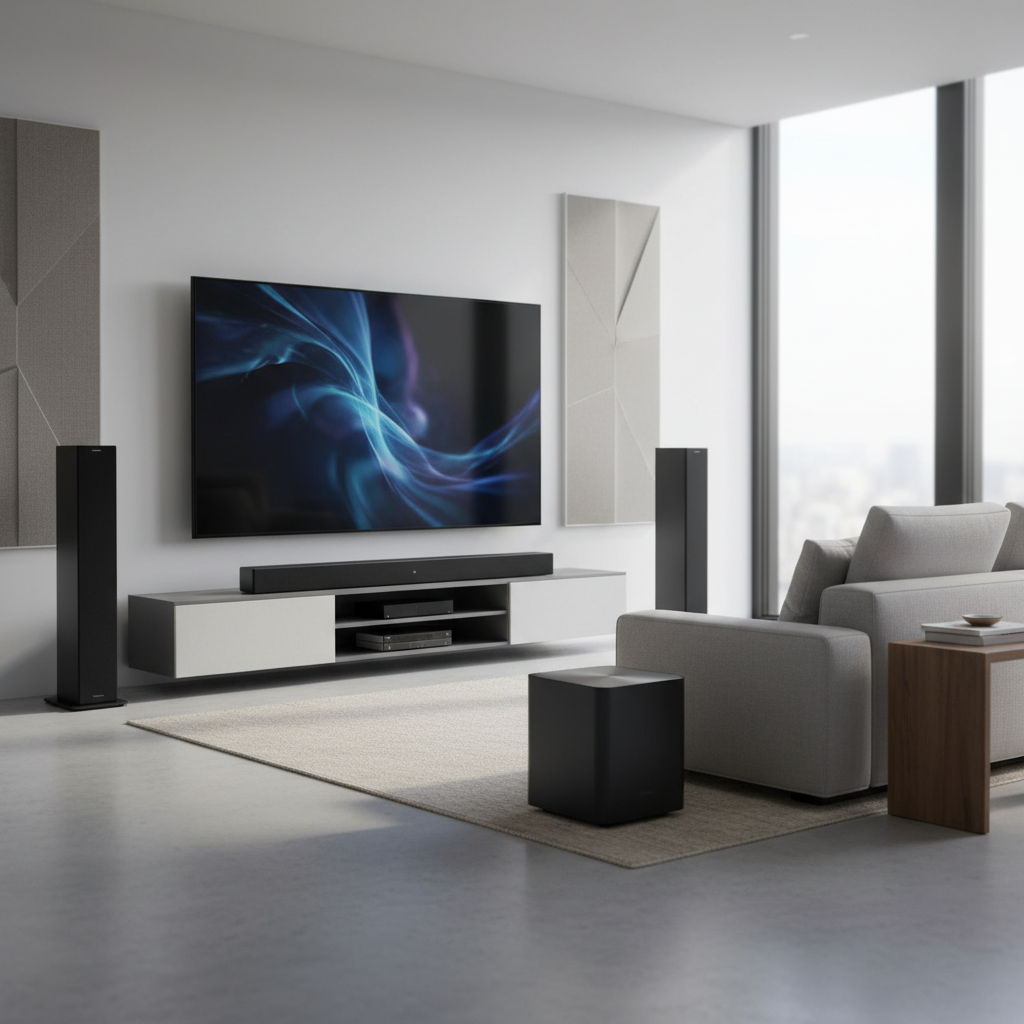
You’ve invested in a magnificent 85-inch television, a cinematic window into breathtaking visuals. Yet, for all its stunning display, the built-in speakers often fall short, delivering flat, uninspiring audio that betrays the immersive potential of your large screen. To truly unlock a home theater experience, a premium soundbar is not just an accessory; it’s an essential upgrade. It transforms mere viewing into a captivating auditory journey, making every movie, game, and music session truly come alive.
This comprehensive guide will help you navigate the sophisticated world of soundbars in 2026, focusing on models perfectly suited for your expansive 85-inch TV. We’ll explore the various types available, delve into crucial factors like sound quality and connectivity, compare leading brands and their standout offerings, and provide a clear buying guide to ensure you make the perfect choice for your entertainment needs and budget. Prepare to elevate your living room into an acoustic sanctuary where every whisper and explosion is rendered with astonishing clarity and depth.
Popular Soundbar Types for Enhanced Audio
Choosing the right soundbar begins with understanding the different configurations designed to deliver varying levels of audio immersion. For an 85-inch TV, the goal is to match the visual grandeur with equally expansive sound.
Single Soundbars
These are streamlined, all-in-one units that house multiple speakers within a single enclosure. They offer a significant upgrade over standard TV speakers without the clutter of extra components.
- Pros: Simplicity, space-saving design, easy setup, and generally a more refined sound profile than integrated TV audio. Many modern single soundbars use advanced psychoacoustic techniques to simulate wider soundstages and even height effects.
- Cons: While convenient, a single soundbar might struggle to fill a large room with true, discrete surround sound. The bass response, though improved, typically won’t match a dedicated subwoofer.
- Best for: Minimalist setups, smaller living areas, or those primarily seeking clearer dialogue and a general audio boost rather than a full cinematic surround experience. For an 85-inch TV, a powerful single soundbar with virtualization technology is a good starting point, but often benefits from expansion.
|
Our Picks for the Best Soundbar in 2026
As an Amazon Associate I earn from qualifying purchases.
|
||
| Num | Product | Action |
|---|---|---|
| 1 | Sony S100F 2.0ch Soundbar with Bass Reflex Speaker, Integrated Tweeter and Bluetooth, (HTS100F), easy setup, compact, home office use with clear sound black |

|
| 2 | Samsung B-Series Soundbar HW B400F 2.0 ch Soundbar with Built in Subwoofer (2025 Model) One Remote Control, Surround Sound Expansion, Voice Enhance Mode |
|
| 3 | ULTIMEA 5.1CH Surround Sound Bar with Subwoofer, Dolby Atmos, VoiceMX, BassMX, APP, 300W Soundbar for Smart TV, Home Theater Surround Sound System for TV, Bluetooth 5.4, Poseidon M60 (2026 Model) |
|
| 4 | ULTIMEA 2.1ch Surround Sound Bar for TV, Built-in Subwoofer, Peak Power 132W, App Control, 16 Inches Bluetooth 5.4 TV Speakers Soundbar, All-in-one PC Soundbar, Opt/AUX/Wall Mount, Poseidon M20 Pro |
|
| 5 | Sound Bar for Smart TV, Soundbar with Bluetooth/ARC/Opt/AUX Connect, Auto Volume Boost, 3 Equalizer Modes, 2 in 1 Detachable Soundbar for TV/PC/Gaming/Projectors |
|
| 6 | Sound Bar, 80W SoundBar for Smart TV, Bluetooth 5.3 Soundbars, 2 in 1 Detachable Home Speaker Bass Effect, Home Theater Surround Sound, ARC/Optical/AUX, for TV/PC/Gaming/Projectors (Deep Black) |
|
| 7 | Sonos Arc Ultra Soundbar with Dolby Atmos and Voice Control - 9.1.4 Surround Sound for TV and Music - Black |
|
| 8 | Amazon Fire TV Soundbar, 2.0 speaker with DTS Virtual:X and Dolby Audio, Bluetooth connectivity |
|
| 9 | ULTIMEA Sound Bar with Wireless Subwoofer, 240W Peak Power, VoiceMX & BassMX, App Control, 2.1ch Soundbar for Smart TV, Adjustable Bass, HDMI, Optical, Bluetooth 6.0, Poseidon M30 (2026 Model) |
|
| 10 | Bose TV Speaker - Soundbar for TV with Bluetooth and HDMI-ARC Connectivity, All-in-One Compact Soundbar, Includes Remote Control, Black |
|
Soundbars with Subwoofers
Adding a dedicated subwoofer to a soundbar instantly elevates your audio experience, particularly for movies and action-packed content. The subwoofer handles low-frequency effects, adding depth and impact that a standalone soundbar cannot.
- Pros: Significantly enhanced bass, leading to a richer and more dynamic sound. Wireless subwoofers offer placement flexibility, allowing you to position them discreetly.
- Cons: Requires more space than a single soundbar, and tuning the subwoofer to integrate seamlessly with the main bar can sometimes require minor adjustments.
- When to Choose: This configuration is ideal for film enthusiasts and gamers who crave rumbling explosions and impactful soundtracks. It provides a more balanced and powerful audio profile, making it a strong contender for pairing with an 85-inch TV.
Multi-Component Soundbar Systems (2.1, 3.1, 5.1, 7.1, and beyond)
These systems expand on the basic soundbar-plus-subwoofer setup by adding dedicated rear speakers and/or upward-firing drivers, aiming for a truly immersive, multi-dimensional sound experience. The numbers denote the channel configuration: the first number is traditional ear-level channels, the second is subwoofers, and the third (if present) is height channels.
- 2.1-Channel: Two front channels (left, right) and a subwoofer. Good for music and basic TV shows.
- 3.1-Channel: Adds a dedicated center channel for clearer dialogue, alongside left, right, and a subwoofer. Excellent for speech-heavy content.
- 5.1-Channel: Introduces two rear channels for true surround sound, placing effects behind you. A common and effective setup for movies.
- x.x.2, x.x.4, etc. (Dolby Atmos/DTS:X): These configurations incorporate upward-firing speakers, often in the main bar and/or rear satellites, to bounce sound off the ceiling, creating “height” effects. A 5.1.2 system has five ear-level, one subwoofer, and two height channels. More advanced systems like 9.1.4 or 11.1.4 offer even greater spatial accuracy and immersion.
- Pros: Provides the most immersive, cinema-like audio experience, especially with object-based formats like Dolby Atmos and DTS:X. Sound effects can appear to come from all around and above you, perfectly complementing a large screen.
- Cons: Requires more physical space for additional speakers, and setup can be slightly more involved. These systems tend to be more expensive.
- When to Choose: For an 85-inch TV, especially in a dedicated home theater or a large living room, a system with at least 5.1 channels and ideally Dolby Atmos/DTS:X support (like 5.1.2 or higher) is highly recommended to fully capitalize on the visual grandeur with equally compelling audio.
Key Factors When Buying a Soundbar for an 85-Inch TV
Selecting the best soundbar for your large television involves more than just picking a popular model. Several critical factors must align to ensure an optimal viewing and listening experience.
Sound Quality
The primary purpose of a soundbar is to deliver superior audio. For an 85-inch TV, you need a soundbar capable of filling a potentially large viewing area with rich, detailed, and powerful sound.
- Crucial Specifications: While raw wattage figures can be misleading, look for models that emphasize clear dialogue, deep and controlled bass, and a wide frequency response. The number of drivers (speakers) and their configuration (front, side, up-firing) directly impacts the soundstage and immersion.
- Immersive Audio Formats: Support for Dolby Atmos and DTS:X is paramount for a cinematic experience. These object-based formats provide three-dimensional sound, making it feel like effects are happening above and around you. Look for soundbars with actual up-firing drivers for the most convincing height effects.
- Dialogue Clarity: Many soundbars offer dedicated center channels or “dialogue enhancement” modes (like Bose’s A.I. Dialogue Mode). This is vital for ensuring conversations are clear and distinct, even amidst chaotic action scenes.
- Room Calibration: Features like Sonos TruePlay, Sennheiser AMBEO’s room calibration, or Yamaha’s Surround:AI automatically analyze your room’s acoustics and optimize the soundbar’s output. This ensures the best possible sound, regardless of your room’s shape or furnishings, which is particularly beneficial in larger, more open spaces typical with an 85-inch TV.
Connectivity
A modern soundbar needs to integrate seamlessly with your large TV and other devices.
- HDMI eARC (Enhanced Audio Return Channel): This is the single most important connection. It allows for high-bandwidth, uncompressed audio formats like Dolby Atmos to be passed from your TV (or devices connected to your TV) to the soundbar with a single cable, simplifying your setup and ensuring the best possible sound quality. Ensure both your TV and soundbar support eARC.
- Other HDMI Inputs: If you have multiple external devices (gaming consoles, Blu-ray players, streaming boxes) that you want to connect directly to the soundbar for audio processing before passing video to the TV, additional HDMI inputs with 4K 120Hz passthrough are highly desirable, especially for next-gen gaming.
- Optical: A common digital audio connection for older TVs or as a backup, though it lacks the bandwidth for advanced audio formats like uncompressed Dolby Atmos.
- Bluetooth: Essential for wireless music streaming from your smartphone, tablet, or laptop.
- Wi-Fi & Streaming Features: Wi-Fi connectivity enables higher-quality music streaming, integration into multi-room audio systems (like Sonos), and access to services like Spotify Connect, Apple AirPlay 2, and Chromecast built-in. Some soundbars also feature built-in voice assistants like Amazon Alexa or Google Assistant.
Size and Design
With an 85-inch TV dominating your entertainment space, the soundbar’s physical presence becomes a crucial consideration.
- Proportionality: The soundbar should be aesthetically proportional to your massive TV. A soundbar that is too short might look dwarfed and out of place. Many premium soundbars designed for larger TVs are themselves quite wide (e.g., over 45 inches / 115 cm) to create a wider soundstage that matches the screen.
- Placement:
- Under the TV: If placing on a stand, check the soundbar’s height. You don’t want it to block any part of your screen or the TV’s IR receiver.
- Wall-Mounted: Many soundbars are designed for wall-mounting, offering a clean, integrated look. Ensure that if your soundbar has up-firing speakers, they are not obstructed by the TV’s bezel or frame. Some wall-mount designs are angled to ensure sound clarity.
- Aesthetics: Consider the soundbar’s finish (e.g., fabric, metal grille, tempered glass) and color to ensure it complements your interior decor. A sleek, minimalist design often works best with large, modern TVs.
Comparing Leading Soundbar Brands for 85-Inch TVs
The soundbar market is diverse, with several brands consistently delivering innovative and high-performance products. Here’s a look at some top contenders for your 85-inch TV in 2026.
Sonos
Sonos is renowned for its seamless multi-room audio ecosystem and user-friendly interface.
- Pros: Exceptional ease of use, robust multi-room functionality, TruePlay room calibration, excellent music streaming capabilities, and clean, minimalist designs. The Sonos Arc Ultra is specifically recommended for TVs over 65 inches, offering a powerful 9.1.4 channel system with impressive Dolby Atmos. The Sonos Beam (Gen 2) is a compact yet capable option that can also be expanded.
- Cons: Generally more premium pricing, and some models might lack a wide array of HDMI inputs or DTS:X support compared to competitors. Requires the Sonos app for full control.
- Key Models: Sonos Arc Ultra, Sonos Beam (Gen 2).
Samsung
Samsung soundbars often pair perfectly with Samsung QLED and OLED TVs, offering integrated features like Q-Symphony.
- Pros: Offers powerful Dolby Atmos and DTS:X support, often bundled with wireless subwoofers and rear speakers for a complete surround sound experience. Features like Q-Symphony (where the TV and soundbar speakers work together) can enhance immersion with compatible Samsung TVs. The Samsung HW-Q990F (11.1.4 channels) is a standout for its immersive surround sound. The HW-S800D offers an ultra-slim design without compromising much on performance.
- Cons: Some models may lack 4K 120Hz passthrough on all HDMI ports, which can be a concern for serious gamers. Designs can sometimes be a bit conservative.
- Key Models: Samsung HW-Q990F, Samsung HW-S800D.
Bose
Bose soundbars are known for their refined, balanced sound and exceptional dialogue clarity.
- Pros: Premium audio quality, particularly strong in rendering crystal-clear dialogue (e.g., A.I. Dialogue Mode in the Bose Smart Soundbar Ultra). Elegant designs, often featuring tempered glass tops. Good for large rooms and integrates well with other Bose products.
- Cons: Can be on the pricier side, and sometimes the bass response might be less aggressively punchy than competitors without an additional subwoofer module. Limited HDMI passthrough on some models.
- Key Models: Bose Smart Soundbar Ultra.
Sony
Sony soundbars often leverage the company’s extensive audio and visual expertise, offering advanced processing and synergy with BRAVIA TVs.
- Pros: Known for high-resolution audio support, 360 Spatial Sound Mapping, and robust build quality. The Sony Bravia Theatre Bar 9 is an impressive all-in-one (7.0.2 channel) solution that creates an expansive soundstage from a single unit, ideal for those seeking powerful audio without extra speakers.
- Cons: Can be expensive, and dedicated subwoofers/rear speakers usually need to be purchased separately at an additional cost if desired.
- Key Models: Sony Bravia Theatre Bar 9.
Other Notable Brands
- Yamaha: Offers soundbars with DTS Virtual:X and advanced room correction like Surround:AI. The Yamaha True X Surround 90A provides a full Dolby Atmos package with innovative beam speaker technology for precise overhead effects.
- JBL: Known for powerful, dynamic sound and innovative features. The JBL Bar 1300XMK2 stands out with its 11.1.4 channels and truly wireless, battery-powered detachable surround speakers.
- Sennheiser: The Sennheiser AMBEO Soundbar | Max is a premium, high-fidelity option, recognized for its exceptional sound quality, 13 drivers, and advanced AMBEO 3D virtualization for an incredibly immersive experience from a single bar.
- Klipsch: The Klipsch Flexus Core 300 is a strong 3.1.2 Dolby Atmos option that can be expanded with wireless subwoofers and surrounds.
Detailed Comparison Table: Top Soundbars for 85-Inch TVs
| Model | Channels | Dolby Atmos/DTS:X | Wireless Subwoofer/Rears | Key Feature | Price Range (Approx. USD) |
|---|---|---|---|---|---|
| Sonos Arc Ultra | 9.1.4 | Yes / No | Optional | Multi-room Audio, TruePlay | $899 – $999 |
| Samsung HW-Q990F | 11.1.4 | Yes / Yes | Included | Immersive Surround, Q-Symphony | $790 – $999 |
| Bose Smart SB Ultra | 5.1.2 | Yes / No | Optional | A.I. Dialogue Mode, Room-filling | $999 |
| JBL Bar 1300XMK2 | 11.1.4 | Yes / Yes | Included | Detachable Wireless Surrounds | $1699 – $1799 |
| Sennheiser AMBEO Max | 5.1.4 (virt.) | Yes / Yes | Optional | Ultimate Sound Quality, AMBEO 3D | $1999 – $2499 |
| Sony Bravia Theatre 9 | 7.0.2 | Yes / Yes | Optional | All-in-One, 360 Spatial Sound | $1399 |
| Yamaha True X Surround 90A | 5.1.2 | Yes / Yes | Included | Surround:AI, Beam Technology | $3499 |
Your Essential Soundbar Buying Guide for 85-Inch TVs
Navigating the options can be overwhelming, but a systematic approach ensures you find the perfect soundbar to complement your 85-inch television.
1. Determine Your Usage Needs
Start by considering how you primarily use your TV.
- Movies and Gaming: If you crave cinematic immersion with booming bass and dynamic surround effects, prioritize systems with dedicated subwoofers and rear speakers, or advanced virtual surround from a single bar. Dolby Atmos and DTS:X support are essential here.
- Music Listening: For audiophiles, look for soundbars with Wi-Fi streaming, hi-res audio support, and a reputation for excellent stereo music reproduction. Multi-room capability can also be a significant bonus.
- Everyday TV and Dialogue Clarity: If your main goal is clearer dialogue and a general boost to TV audio, a 2.1 or 3.1 system with dialogue enhancement features will be highly effective.
2. Assess Your Space and Setup
The size and acoustics of your room, along with your TV placement, are critical.
- Room Size: A larger room benefits significantly from multi-channel systems (5.1.2 or higher) and more powerful soundbars to fill the space effectively.
- TV Placement: Measure the available space below your TV if placing the soundbar on a stand. If wall-mounting, ensure the soundbar’s width is proportional to your 85-inch screen, and that any upward-firing drivers are not obstructed.
- Wiring Preferences: Decide if you prefer a minimalist, single-bar solution, or if you’re comfortable with a wireless subwoofer and discrete rear speakers for true surround sound.
3. Establish Your Budget
Soundbars range from a few hundred to several thousand dollars. Defining your budget helps narrow down choices.
- Entry-Level (Under $500): You can find decent 2.1 or 3.1 soundbars that offer a noticeable upgrade over TV speakers, often with virtual surround sound.
- Mid-Range ($500 – $1000): This segment offers more powerful systems, often with included wireless subwoofers and sometimes even basic Dolby Atmos virtualization. Many strong 5.1 and 5.1.2 systems fall here.
- Premium ($1000+): At this level, you gain access to flagship models with advanced features, true object-based audio, dedicated wireless surrounds, superior build quality, and sophisticated room calibration. These are often the best match for an 85-inch TV.
4. Research and Compare
Once you have a clearer idea of your needs, dive into research.
- Read Reviews: Consult expert reviews from reputable audio publications and user reviews to get real-world insights into performance, ease of use, and common issues.
- Feature Checklist: Create a checklist of essential features (e.g., HDMI eARC, Dolby Atmos, Wi-Fi, voice assistant) and prioritize them.
- Listen if Possible: While challenging for soundbars, if you have the opportunity to hear different models in person, take it. Nothing beats a personal audition.
5. Purchase and Setup
Choose a reputable retailer that offers good warranty and return policies.
- Connection: Connect your soundbar to your 85-inch TV via HDMI eARC for the best audio fidelity. Follow the manufacturer’s instructions for any additional connections.
- Room Calibration: If your chosen soundbar offers room calibration (e.g., Sonos TruePlay, Sennheiser AMBEO), run it. This one-time process dramatically optimizes the sound for your specific environment.
- Fine-Tuning: Experiment with sound modes, EQ settings, and subwoofer levels to personalize the audio to your taste.
Conclusion
Choosing the ideal soundbar for your 85-inch TV in 2026 is a pivotal step in completing your ultimate home entertainment setup. While the market offers a dizzying array of options, focusing on models with robust multi-channel capabilities, essential connectivity like HDMI eARC, and advanced immersive audio formats such as Dolby Atmos will ensure your investment truly enhances your viewing experience. Brands like Sonos, Samsung, Bose, Sony, JBL, Sennheiser, and Yamaha continue to push the boundaries of home audio, offering solutions that cater to every preference, from minimalist designs to comprehensive surround sound systems. By carefully considering your specific needs, room dynamics, and budget, you can find a soundbar that delivers audio as grand and captivating as your television’s display. Don’t let your stunning visuals be undermined by subpar sound; invest in a soundbar that brings every moment to life with breathtaking clarity and power.
What sonic experience are you dreaming of for your next movie night?
Frequently Asked Questions
What size soundbar is best for an 85-inch TV?
For an 85-inch TV, a soundbar that is visually proportionate to the screen is generally recommended. Look for models that are at least 45-50 inches (115-127 cm) wide or more. This helps create a wider soundstage that matches the expansive visuals. Ensure the soundbar’s height does not obstruct the bottom of your screen if placed on a stand.
Do I need a subwoofer with my soundbar?
While a standalone soundbar offers improved audio, a dedicated subwoofer is highly recommended for an 85-inch TV. It provides crucial low-frequency effects, adding depth and impact to movies, music, and games that built-in TV speakers or even single soundbars cannot achieve. Wireless subwoofers offer flexible placement.
What is Dolby Atmos, and do I need it?
Dolby Atmos is an immersive audio technology that adds “height” channels to a surround sound experience, making it sound like effects are coming from above you. For an 85-inch TV and a cinematic home theater, Dolby Atmos (and its competitor, DTS:X) is highly desirable as it dramatically enhances immersion, creating a three-dimensional sound field that complements the large screen.
What’s the difference between HDMI ARC and eARC?
HDMI ARC (Audio Return Channel) allows audio to travel from your TV back to your soundbar with a single HDMI cable. HDMI eARC (enhanced Audio Return Channel) is an upgraded version with higher bandwidth, capable of transmitting uncompressed, high-bitrate audio formats like Dolby Atmos and DTS:X. For an optimal experience with an 85-inch TV, especially for immersive audio, eARC is essential.
Can I use a soundbar for music as well as movies?
Absolutely. Most modern soundbars offer excellent music playback capabilities, often supporting high-resolution audio and featuring Bluetooth and Wi-Fi connectivity for streaming from various services. Many also integrate into multi-room audio systems, allowing your soundbar to double as a central music hub.
How important is room calibration?
Room calibration is very important, especially for large rooms or those with challenging acoustics. Features found in premium soundbars (e.g., Sonos TruePlay, Sennheiser AMBEO) automatically analyze your room’s dimensions and furnishings, then adjust the soundbar’s output to optimize audio performance. This ensures you get the best possible sound tailored to your specific environment.