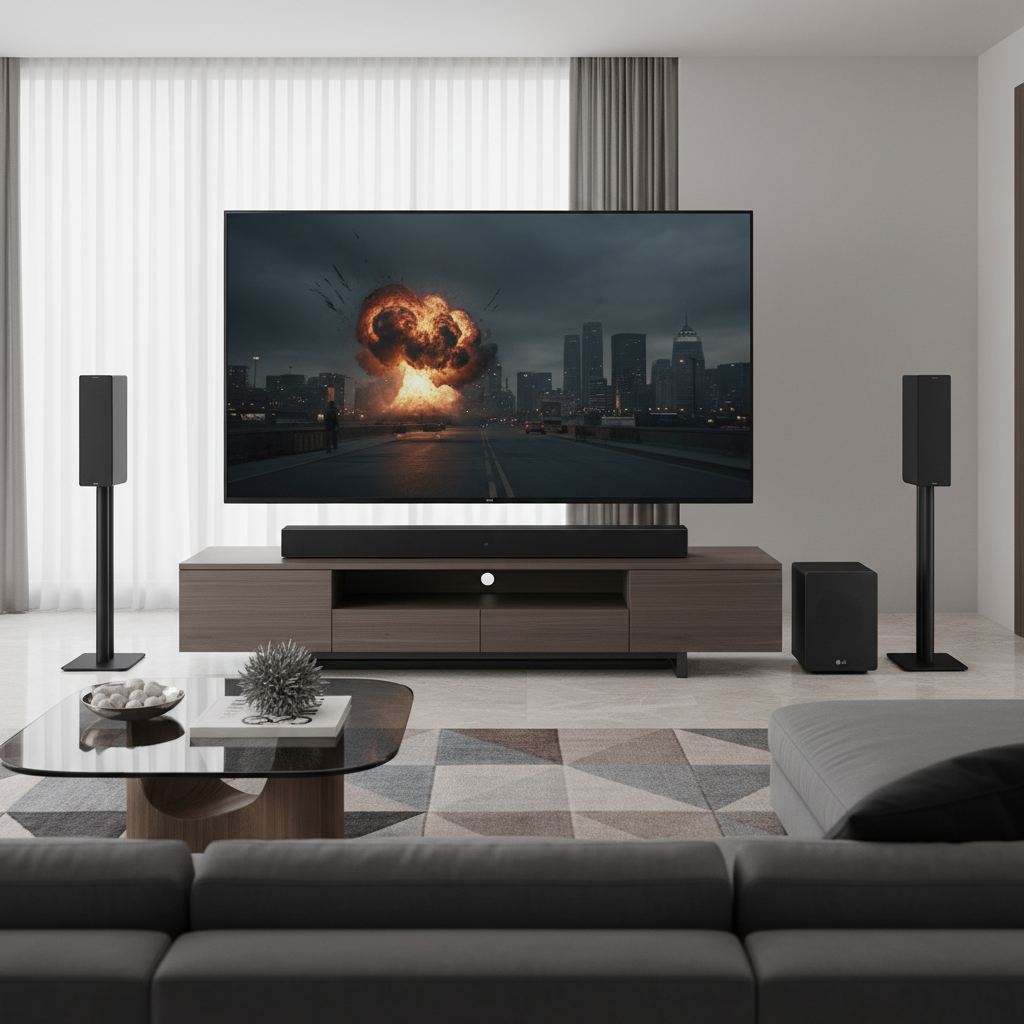
Imagine not just watching a movie, but truly experiencing it. The rumble of a distant explosion, the whisper of dialogue directly in front of you, and the sensation of rain falling from above—all enveloping you in a truly three-dimensional soundscape. This is the promise of Dolby Atmos, and with the latest advancements in soundbar technology for 2026, achieving this cinematic immersion at home has never been more accessible or impressive. For film enthusiasts seeking to transform their living room into a premium movie theater, selecting the right Dolby Atmos soundbar is paramount. This comprehensive guide will navigate the cutting-edge options available, highlight crucial features, and help you find the perfect soundbar to bring your favorite films to life with unparalleled audio quality.
Understanding Dolby Atmos in Soundbars
Dolby Atmos revolutionizes audio by moving beyond traditional channel-based surround sound to an object-based format. Instead of sounds being mixed to specific speakers (like left front or right rear), they are treated as individual audio objects that can be precisely placed and moved anywhere in a 3D space, including overhead. This creates a far more realistic and immersive listening experience.
Soundbars achieve this immersive effect primarily through up-firing drivers. These dedicated speakers are built into the top of the soundbar, directing sound upwards to reflect off your ceiling and descend around the listening position, creating the illusion of overhead audio. Advanced digital signal processing and psychoacoustic techniques further enhance this three-dimensional soundstage, making it seem as if sounds are coming from all around and above you. For the best uncompressed Dolby Atmos experience, an HDMI eARC (enhanced Audio Return Channel) connection between your TV and soundbar is essential, allowing high-bandwidth audio data to pass seamlessly.
Types of Dolby Atmos Soundbar Systems
The world of Dolby Atmos soundbars offers various configurations, each designed to suit different spaces, budgets, and desires for immersion. Understanding these types is the first step in finding your ideal home cinema companion.
Standalone Dolby Atmos Soundbars
These compact units pack all their audio components, including up-firing drivers, into a single bar. They are celebrated for their simplicity and minimal footprint.
- Pros: Easy setup, less cable clutter, ideal for smaller rooms or minimalist setups. Many offer impressive virtual surround and height effects for a single bar.
- Cons: Can’t match the discrete separation and impact of dedicated rear speakers or separate subwoofers for deep bass.
- Ideal for: Apartment dwellers, those seeking a significant audio upgrade without overwhelming their space, or users prioritizing aesthetics and ease of integration.
- Examples: The Sennheiser AMBEO Soundbar Max and Bose Smart Ultra Soundbar are prime examples, offering expansive soundstages from a single unit.
|
Our Picks for the Best Soundbar in 2026
As an Amazon Associate I earn from qualifying purchases.
|
||
| Num | Product | Action |
|---|---|---|
| 1 | ULTIMEA Sound Bar with Wireless Subwoofer, 240W Peak Power, VoiceMX & BassMX, App Control, 2.1ch Soundbar for Smart TV, Adjustable Bass, HDMI, Optical, Bluetooth 6.0, Poseidon M30 (2026 Model) |

|
| 2 | Sound Bar, 80W SoundBar for Smart TV, Bluetooth 5.3 Soundbars, 2 in 1 Detachable Home Speaker Bass Effect, Home Theater Surround Sound, ARC/Optical/AUX, for TV/PC/Gaming/Projectors (Deep Black) |
|
| 3 | ULTIMEA 5.1CH Surround Sound Bar with Subwoofer, Dolby Atmos, VoiceMX, BassMX, APP, 300W Soundbar for Smart TV, Home Theater Surround Sound System for TV, Bluetooth 5.4, Poseidon M60 (2026 Model) |
|
| 4 | Samsung B-Series Soundbar HW B400F 2.0 ch Soundbar with Built in Subwoofer (2025 Model) One Remote Control, Surround Sound Expansion, Voice Enhance Mode |
|
| 5 | Bose TV Speaker - Soundbar for TV with Bluetooth and HDMI-ARC Connectivity, All-in-One Compact Soundbar, Includes Remote Control, Black |
|
| 6 | Sonos Arc Ultra Soundbar with Dolby Atmos and Voice Control - 9.1.4 Surround Sound for TV and Music - Black |
|
| 7 | Sony S100F 2.0ch Soundbar with Bass Reflex Speaker, Integrated Tweeter and Bluetooth, (HTS100F), easy setup, compact, home office use with clear sound black |
|
| 8 | Sound Bar for Smart TV, Soundbar with Bluetooth/ARC/Opt/AUX Connect, Auto Volume Boost, 3 Equalizer Modes, 2 in 1 Detachable Soundbar for TV/PC/Gaming/Projectors |
|
| 9 | ULTIMEA 2.1ch Surround Sound Bar for TV, Built-in Subwoofer, Peak Power 132W, App Control, 16 Inches Bluetooth 5.4 TV Speakers Soundbar, All-in-one PC Soundbar, Opt/AUX/Wall Mount, Poseidon M20 Pro |
|
| 10 | Amazon Fire TV Soundbar, 2.0 speaker with DTS Virtual:X and Dolby Audio, Bluetooth connectivity |
|
Dolby Atmos Soundbars with Subwoofer
This popular configuration pairs a primary soundbar with a dedicated, often wireless, subwoofer. The subwoofer handles low-frequency effects, adding impactful bass that significantly enhances movie explosions, scores, and deep voices.
- Pros: Dramatically improved bass performance for cinematic rumble, still relatively simple to set up with fewer cables than full surround systems.
- Cons: The subwoofer requires its own power outlet and placement, and discrete rear effects are still simulated from the front.
- Ideal for: Most living rooms, users who want a substantial upgrade in audio depth and power for movies, and those who appreciate a tangible bass presence.
- Examples: Many mid-range options, like the Samsung HW-Q800F, often come as a soundbar-subwoofer combo, delivering a robust 3.1.2 or 5.1.2 experience.
Full Dolby Atmos Soundbar Systems (with Satellite Speakers)
For the ultimate home theater experience, these systems combine a soundbar, a subwoofer, and a pair of wireless satellite (rear) speakers. The satellites provide true discrete surround sound, placing effects directly behind or beside you, while the soundbar handles front and height channels.
- Pros: Most immersive and true-to-life surround sound with discrete audio objects placed all around you, creating a seamless 3D sound bubble.
- Cons: More components, potentially more wires (for power to satellites), and requires more space for optimal speaker placement.
- Ideal for: Dedicated home theater rooms, larger living spaces, and audiophiles who demand the most authentic and comprehensive cinematic audio immersion.
- Examples: The Samsung HW-Q990F (an 11.1.4 system) and the Sonos Arc Ultra (when paired with optional Sonos Subs and Era 300 rears for a 9.1.4 setup) are leading contenders in this category, offering breathtaking full-package performance.
Key Factors When Choosing a Dolby Atmos Soundbar
Selecting the perfect Dolby Atmos soundbar involves more than just picking a brand. A careful consideration of several technical and practical elements will ensure your investment genuinely enhances your movie-watching experience.
Sound Quality and Immersion
This is the core of any audio device, and for Dolby Atmos, it’s about how convincingly it creates a 3D soundstage.
- Channel Configuration: This describes the number of main, subwoofer, and height channels (e.g., 5.1.2, 7.1.4, 11.1.4). Higher numbers generally indicate more speakers and a more intricate sound field. For instance, an 11.1.4 system like the Samsung HW-Q990F provides eleven main channels, one subwoofer, and four up-firing height channels, delivering exceptional spatial detail.
- Up-firing Drivers: The quality and angling of these speakers directly impact the effectiveness of overhead effects. Look for reviews that specifically praise the “height” aspect of a soundbar’s performance.
- Dialogue Clarity: Crucial for movies, ensure the soundbar offers clear, crisp dialogue, often achieved with a dedicated center channel or advanced processing.
- Bass Depth and Impact: A powerful subwoofer (or integrated woofers in standalone bars) is essential for feeling explosions and low-frequency effects.
- Soundstage Width: A good soundbar creates a wide soundstage that extends beyond the physical limits of your TV, making the audio feel expansive.
- DTS:X Compatibility: While Dolby Atmos is dominant, some movies use DTS:X. Compatibility ensures you’re ready for all object-based audio content.
Connectivity Options
Modern soundbars require robust connectivity to deliver the best audio and integrate seamlessly with your entertainment system.
- HDMI eARC: This is non-negotiable for uncompressed Dolby Atmos. Ensure your TV also has an eARC port to benefit from the highest quality audio transmission with a single cable.
- HDMI Inputs: Multiple HDMI inputs allow you to connect sources like a Blu-ray player or gaming console directly to the soundbar, bypassing the TV’s processing and ensuring the purest audio signal.
- Optical: A common backup, but it cannot carry full Dolby Atmos signals.
- Bluetooth and Wi-Fi: Essential for wireless music streaming and integrating into multi-room audio systems. Wi-Fi generally offers higher fidelity streaming.
Size, Design, and Setup
A soundbar should complement your living space, not dominate it.
- Physical Dimensions: Measure the space under your TV and ensure the soundbar fits without obstructing the screen or the TV’s IR receiver.
- Aesthetics: Choose a design that blends with your home decor. Many premium soundbars offer sleek, minimalist profiles.
- Ease of Installation: Wireless components (subwoofers, satellites) simplify setup. Many high-end soundbars also feature automatic room calibration systems to optimize sound for your specific environment.
Smart Features and Ecosystem
Beyond just sound, many soundbars offer smart functionalities that enhance convenience and integration.
- Voice Assistants: Built-in Alexa or Google Assistant allows for hands-free control of your soundbar, smart home devices, and music playback.
- Multi-room Audio: Brands like Sonos and Bose excel here, allowing you to link your soundbar with other wireless speakers around your home for synchronized audio.
- App Control: Dedicated smartphone apps often provide granular control over sound settings, EQ, and input selection.
Top Dolby Atmos Soundbars for Movies in 2026: A Detailed Comparison
The 2026 landscape for Dolby Atmos soundbars is rich with innovation, offering stunning cinematic experiences across various price points and configurations. Here are some of the standout performers:
Samsung HW-Q990F:
- Overview: Often hailed as the king of immersive soundbar systems, the Q990F is a complete 11.1.4 package with a powerful soundbar, dedicated wireless subwoofer, and two discrete wireless rear speakers with up-firing drivers.
- Pros: Unrivaled immersive surround sound for movies, impactful bass, excellent dialogue clarity, Q-Symphony integration with Samsung TVs.
- Cons: Premium price, requires space for rear speakers.
- Ideal for: Home theater enthusiasts seeking the most enveloping and dynamic Dolby Atmos experience without going full component separates.
Sonos Arc Ultra:
- Overview: The flagship Dolby Atmos soundbar from Sonos, evolving the original Arc with enhanced channel configuration (e.g., 9.1.4 when fully expanded). It’s a powerful standalone bar that truly shines when combined with a Sonos Sub and Era 300 rear speakers.
- Pros: Exceptional sound quality for both movies and music, robust multi-room audio ecosystem, sleek design, Trueplay room tuning.
- Cons: Expensive when fully outfitted with sub and rears, requires the Sonos ecosystem for full benefits.
- Ideal for: Users invested in the Sonos ecosystem, those prioritizing both cinematic audio and high-fidelity music streaming, and design-conscious individuals.
Sony Bravia Theatre Bar 9:
- Overview: A premium standalone soundbar designed to deliver an impressive 3D soundstage with its numerous built-in speakers, including dedicated height and surround channels.
- Pros: Excellent 3D sound performance from a single bar, clear dialogue, integrates well with Sony Bravia TVs.
- Cons: Bass can be less impactful than systems with a dedicated external subwoofer.
- Ideal for: Those who want superb cinematic immersion without the clutter of extra speakers, especially owners of Sony TVs.
Bose Smart Ultra Soundbar:
- Overview: A sleek and powerful standalone soundbar known for Bose’s signature clear and detailed sound profile, coupled with strong smart features.
- Pros: Great sound for movies and music, attractive design, excellent dialogue clarity, built-in voice control.
- Cons: Streaming ecosystem not as robust as Sonos, can be pricey for a standalone bar.
- Ideal for: Users prioritizing premium standalone sound and design, those who appreciate Bose’s audio signature, and smaller to medium-sized rooms.
Sennheiser AMBEO Soundbar Max / Plus:
- Overview: The AMBEO series is renowned for its ability to create a massive, convincing virtual surround sound experience from a single bar, pushing the boundaries of what standalone units can achieve.
- Pros: Incredibly wide and tall soundstage, powerful integrated bass, superb audio fidelity, advanced room calibration.
- Cons: Very expensive, quite large.
- Ideal for: Audiophiles seeking the best possible sound from a single-unit solution, willing to invest heavily for top-tier performance.
Hisense AX5125H / Vizio Elevate SE SL512X-0806:
- Overview: These models represent excellent value, offering complete Dolby Atmos systems (soundbar, subwoofer, and rear speakers) at a more accessible price point. The Vizio Elevate SE notably features rotating speakers for height effects.
- Pros: Affordable full-system immersion, good bass, includes all components for true surround sound.
- Cons: Build quality and overall refinement may not match premium brands, less advanced features.
- Ideal for: Budget-conscious buyers who still want a full, impactful Dolby Atmos experience with discrete rear channels.
Bảng So Sánh Chi Tiết (Detailed Comparison Table)
| Feature | Samsung HW-Q990F | Sonos Arc Ultra | Sony Bravia Theatre Bar 9 | Bose Smart Ultra Soundbar | Hisense AX5125H |
|---|---|---|---|---|---|
| Configuration | 11.1.4 (Bar+Sub+Rears) | 9.1.4 (Bar+Opt. Sub/Rears) | Standalone (Virtual) | Standalone (Virtual) | 5.1.2 (Bar+Sub+Rears) |
| Dolby Atmos | Yes | Yes | Yes | Yes | Yes |
| DTS:X Support | Yes | Yes | Yes | Yes | Yes |
| HDMI eARC | Yes | Yes | Yes | Yes | Yes |
| Up-firing Drivers | Yes (Bar & Rears) | Yes | Yes | Yes | Yes |
| Wireless Subwoofer | Included | Optional | Internal | Internal | Included |
| Wireless Rears | Included | Optional | No | Optional | Included |
| Smart Features | Alexa, Google Assistant | Alexa, Google Assistant | Works with Voice Assist | Alexa, Google Assistant | No Advanced Smart |
| Key Strength | Ultimate Immersion | Versatile Ecosystem | Premium Standalone 3D | Clear Dialogue/Design | Best Value Full System |
Your Essential Buying Guide for a Dolby Atmos Soundbar
Navigating the options can be overwhelming, but a systematic approach will lead you to the perfect soundbar for your cinematic adventures.
Define Your Needs and Space
Start by considering how you’ll primarily use the soundbar and the environment it will inhabit.
- Primary Use: Is it solely for movies, or will you also be streaming music and gaming? Some soundbars excel at one more than the other.
- Room Size and Layout: A large, open-concept living room will benefit significantly from a full system with rear speakers (like the Samsung HW-Q990F), while a smaller bedroom might be perfectly served by a premium standalone bar (like the Bose Smart Ultra).
- Existing Equipment: Ensure compatibility with your current TV, especially concerning HDMI eARC ports.
Set Your Budget
Soundbars range from a few hundred to several thousand dollars. Determine your comfortable spending limit and consider the long-term value.
- Entry-Level: You can find decent Dolby Atmos soundbars with subwoofers for under $500, often offering 3.1.2 or 5.1.2 configurations.
- Mid-Range: Between $500 and $1000, you’ll see more refined standalone bars or basic full systems with wireless rears.
- Premium/High-End: Above $1000, you enter the territory of flagship standalone bars and comprehensive multi-speaker systems that deliver truly elite performance.
- Consider future expansion: Some systems allow you to start with a soundbar and add a subwoofer or rear speakers later, making it easier to manage your budget over time.
Research and Audition
Don’t buy blind. Information is power in making an informed decision.
- Read Reviews: Consult expert reviews from reputable audio publications and tech sites. Look for consistent praise regarding Dolby Atmos performance, dialogue clarity, and bass.
- Watch Comparison Videos: YouTube channels often provide excellent side-by-side comparisons that can give you a better feel for the sound profile.
- Visit Stores: If possible, audition soundbars in person. While store acoustics differ from home, it can provide a baseline impression of sound quality.
- Check User Feedback: Real-world experiences from other buyers can highlight practical pros and cons not always covered in professional reviews.
“A truly immersive soundbar doesn’t just make sound louder; it makes it smarter, placing you at the heart of the story with every nuanced detail.” – David Pogue, Tech Columnist
Installation and Optimization
Even the best soundbar needs proper setup to deliver its full potential.
- Placement: Position the soundbar centrally below your TV. For systems with rear speakers, ensure they are placed equidistant from your listening position, ideally slightly behind and to the sides.
- Calibration: Utilize any automatic room calibration features your soundbar offers (e.g., Sonos Trueplay, Samsung SpaceFit Sound). These systems use microphones to analyze your room’s acoustics and optimize the sound profile.
- TV Settings: Ensure your TV’s audio output is set to “Passthrough” or “Bitstream” and that eARC is enabled for the best Dolby Atmos experience.
Conclusion
The journey to finding the best Dolby Atmos soundbar for movies in 2026 is an exciting one, promising a dramatic upgrade to your home entertainment. Whether you opt for the all-encompassing immersion of a full system like the Samsung HW-Q990F, the versatile brilliance of the Sonos Arc Ultra, or the powerful simplicity of a premium standalone bar like the Bose Smart Ultra, the perfect cinematic soundscape awaits. By understanding the different types, considering key features like channel configuration and connectivity, and carefully matching your choice to your space and budget, you can transform ordinary movie nights into extraordinary experiences.
Which groundbreaking Dolby Atmos soundbar will you choose to redefine your home cinema in 2026?
Câu Hỏi Thường Gặp
What is the difference between 5.1.2 and 7.1.4 soundbars?
The numbers in soundbar configurations refer to the number of traditional surround channels (e.g., front left/right, center, side surrounds), subwoofers, and height channels, respectively. A 5.1.2 system has five main channels, one subwoofer, and two up-firing height channels, while a 7.1.4 system offers seven main channels, one subwoofer, and four up-firing height channels, providing a more detailed and expansive sound field.
Do I need a subwoofer with a Dolby Atmos soundbar?
While some standalone Dolby Atmos soundbars can produce decent bass, a dedicated external subwoofer significantly enhances the cinematic experience. It delivers deeper, more impactful low-frequency effects that are crucial for action movies, explosions, and rich musical scores, adding a physical dimension to your audio that integrated solutions often can’t match.
Can I add rear speakers to any Dolby Atmos soundbar?
No, not all Dolby Atmos soundbars are expandable with rear speakers. This capability depends on the specific soundbar model and brand. Systems like the Sonos Arc Ultra are designed to be part of an ecosystem where wireless rears (e.g., Sonos Era 300) can be added, while others, particularly standalone bars, are not. Always check the product specifications for expandability options.
Is Dolby Atmos worth it for movies?
Absolutely. Dolby Atmos transforms movie watching by creating a truly three-dimensional sound experience, making sound effects seem to come from all around and above you. This spatial audio adds incredible depth, realism, and immersion, drawing you deeper into the film’s narrative and enhancing the emotional impact of every scene.
What content do I need for Dolby Atmos?
To experience Dolby Atmos, you need content encoded with Dolby Atmos audio. This is commonly found on 4K Ultra HD Blu-ray discs, streaming services like Netflix, Disney+, Max, and Apple TV+ (with a premium subscription), and compatible video games on modern consoles. Your streaming device or Blu-ray player, TV, and soundbar must all support Dolby Atmos.