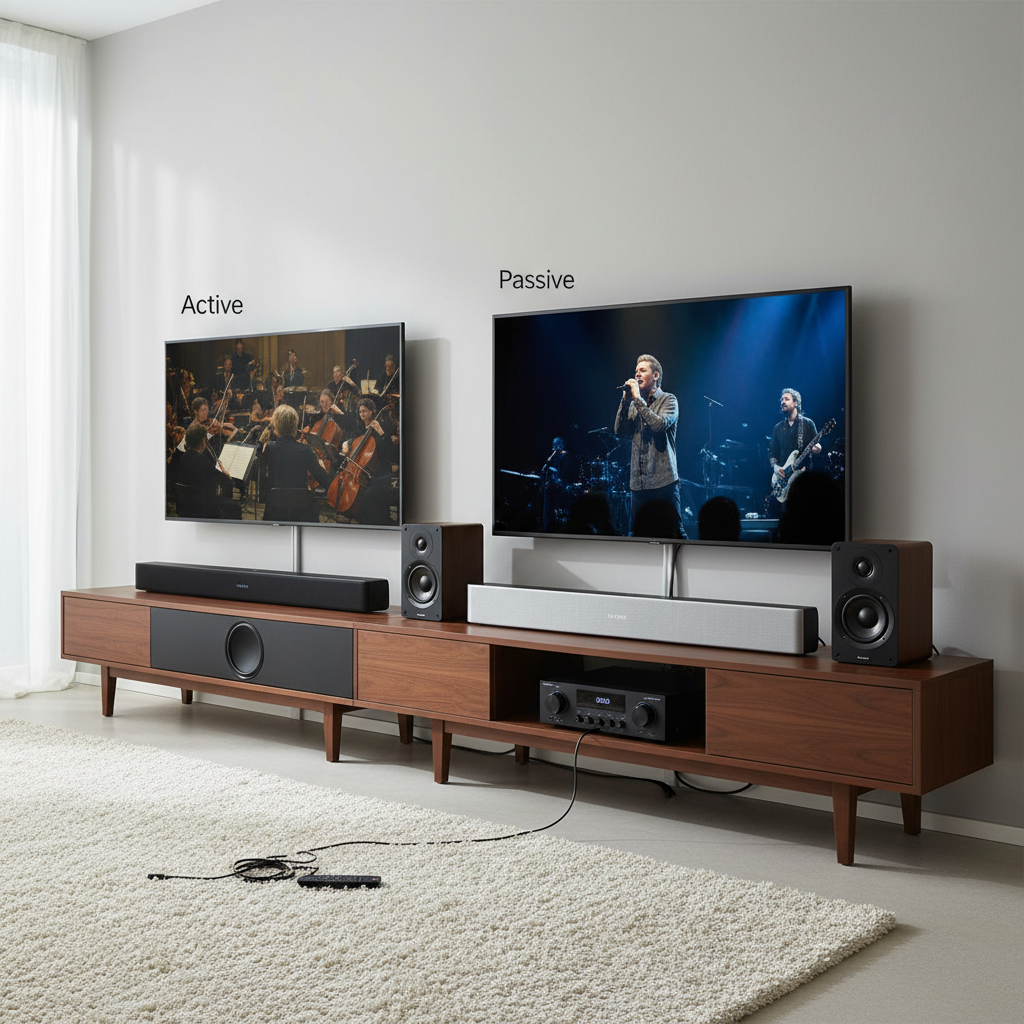
Transforming a large, open living room into an immersive audio sanctuary can be a daunting task. While the expansive space offers a luxurious feel, it often presents unique challenges for audio reproduction. Standard sound systems can struggle to fill such a vast area, leading to a thin, unimpressive sound experience that fails to deliver the cinematic punch or musical depth you crave. This comprehensive guide is designed to cut through the complexity, providing expert insights and practical advice to help you select the best soundbar that not only fills your grand living space with rich, powerful audio but also integrates seamlessly into your home entertainment ecosystem.
Popular Soundbar Types for Spacious Settings
Choosing the right soundbar type is the first step in optimizing audio for a large room. The expansive nature of these spaces demands systems with sufficient power, channel configuration, and projection capabilities to create a truly enveloping soundstage.
Single Soundbar (All-in-One)
A single soundbar, often referred to as an all-in-one unit, consolidates multiple speakers into one sleek enclosure. These are typically designed for simplicity and minimalism, making them a popular choice for those who prefer a clean aesthetic without the clutter of extra speakers.
- Pros: Easy setup, compact design, reduced cable management, often more affordable.
- Cons: Can struggle to fill very large, open rooms with truly immersive sound due to limited channel separation and bass output. Virtual surround sound may not be as convincing in expansive spaces.
- Best for: Smaller to medium-sized open living rooms, or situations where budget and aesthetics are the absolute priority, and you’re willing to compromise slightly on ultimate immersion. They might serve well in a large room for casual TV viewing but fall short for cinematic experiences.
|
Our Picks for the Best Soundbar in 2026
As an Amazon Associate I earn from qualifying purchases.
|
||
| Num | Product | Action |
|---|---|---|
| 1 | Samsung B-Series Soundbar HW B400F 2.0 ch Soundbar with Built in Subwoofer (2025 Model) One Remote Control, Surround Sound Expansion, Voice Enhance Mode |

|
| 2 | Sonos Arc Ultra Soundbar with Dolby Atmos and Voice Control - 9.1.4 Surround Sound for TV and Music - Black |
|
| 3 | ULTIMEA Sound Bar with Wireless Subwoofer, 240W Peak Power, VoiceMX & BassMX, App Control, 2.1ch Soundbar for Smart TV, Adjustable Bass, HDMI, Optical, Bluetooth 6.0, Poseidon M30 (2026 Model) |
|
| 4 | ULTIMEA 5.1CH Surround Sound Bar with Subwoofer, Dolby Atmos, VoiceMX, BassMX, APP, 300W Soundbar for Smart TV, Home Theater Surround Sound System for TV, Bluetooth 5.4, Poseidon M60 (2026 Model) |
|
| 5 | Sound Bar, 80W SoundBar for Smart TV, Bluetooth 5.3 Soundbars, 2 in 1 Detachable Home Speaker Bass Effect, Home Theater Surround Sound, ARC/Optical/AUX, for TV/PC/Gaming/Projectors (Deep Black) |
|
| 6 | ULTIMEA 2.1ch Surround Sound Bar for TV, Built-in Subwoofer, Peak Power 132W, App Control, 16 Inches Bluetooth 5.4 TV Speakers Soundbar, All-in-one PC Soundbar, Opt/AUX/Wall Mount, Poseidon M20 Pro |
|
| 7 | Amazon Fire TV Soundbar, 2.0 speaker with DTS Virtual:X and Dolby Audio, Bluetooth connectivity |
|
| 8 | Sound Bar for Smart TV, Soundbar with Bluetooth/ARC/Opt/AUX Connect, Auto Volume Boost, 3 Equalizer Modes, 2 in 1 Detachable Soundbar for TV/PC/Gaming/Projectors |
|
| 9 | Bose TV Speaker - Soundbar for TV with Bluetooth and HDMI-ARC Connectivity, All-in-One Compact Soundbar, Includes Remote Control, Black |
|
| 10 | Sony S100F 2.0ch Soundbar with Bass Reflex Speaker, Integrated Tweeter and Bluetooth, (HTS100F), easy setup, compact, home office use with clear sound black |
|
Soundbar with External Subwoofer
This configuration pairs the main soundbar unit with a separate, dedicated subwoofer, typically connected wirelessly. The subwoofer handles the low-frequency effects (LFE), providing a deeper, more impactful bass that a single soundbar often cannot achieve on its own.
- Pros: Significantly enhanced bass response, crucial for feeling action scenes and enriching music. Better overall dynamic range, making it easier to fill large rooms with fuller sound.
- Cons: Requires an additional component, which needs its own power outlet and placement. Can be more expensive than a standalone soundbar.
- When to Choose This Type: For large open living rooms, a soundbar with an external subwoofer is almost a necessity. The added bass is vital for providing the necessary presence and depth to overcome the open-space acoustics and deliver a satisfying audio experience for movies, music, and games.
Multi-Channel Soundbars (2.1, 3.1, 5.1, 7.1, and Beyond)
Multi-channel soundbars refer to systems that offer distinct audio channels for a more spatially accurate sound. The numbers denote the configuration: the first digit is the number of main channels (left, right, center, surround), and the second is the number of subwoofers. A third digit (e.g., 5.1.2) indicates dedicated up-firing speakers for height effects like Dolby Atmos.
- 2.1 Channel: Two main channels (stereo) plus a subwoofer. Offers basic stereo separation with enhanced bass. Good for improving TV audio but limited for immersive surround in large rooms.
- 3.1 Channel: Adds a dedicated center channel for clearer dialogue, along with left, right, and a subwoofer. Better for movie watching where dialogue clarity is paramount, even in larger spaces.
- 5.1 Channel: Adds two dedicated rear surround channels (either wired or wireless satellites) to the 3.1 setup. This is often the minimum recommended for true surround sound in a large room, creating a more enveloping sound field.
- 7.1 Channel and Beyond (e.g., 5.1.2, 7.1.4): These configurations include even more discrete channels, often with additional surround speakers or up-firing drivers for Dolby Atmos and DTS:X height effects. For large, open living rooms, these systems are highly recommended as they create the most convincing and expansive three-dimensional soundstages, truly immersing the listener.
Essential Factors for Soundbars in Large Rooms
Selecting a soundbar for a spacious living area involves careful consideration of several critical elements to ensure it performs optimally and integrates well into your home.
Sound Quality
The most crucial aspect for any audio device, sound quality, becomes even more paramount in a large, open room. You need a system that can deliver clear, detailed, and powerful audio across the entire frequency range without distortion, even at higher volumes.
- Key Specifications:
- Wattage/Power Output: While not the only indicator, higher wattage generally means more headroom and the ability to drive speakers louder without distortion. For large rooms, look for systems with a substantial total power output (e.g., 500W and above).
- Frequency Response: A wider frequency response (e.g., 20 Hz – 20 kHz) indicates the system can reproduce deep bass and crisp highs. This is crucial for fidelity in an expansive environment.
- Driver Size and Quantity: Larger drivers (speakers) and a greater number of them can move more air, leading to a fuller, more impactful sound that effectively fills a large space. Dedicated tweeters for highs and mid-range drivers are also important.
- How to Evaluate Sound Quality: Beyond specifications, reading expert reviews and, if possible, listening to demonstrations are invaluable. Pay attention to dialogue clarity, bass depth and tightness, surround sound separation, and overall balance. Look for features like room correction technology, which can adapt the soundbar’s output to your room’s unique acoustics.
Connectivity
Modern soundbars offer a variety of connectivity options, ensuring compatibility with your TV and other devices. For large rooms, robust and high-bandwidth connections are essential for optimal audio performance.
- Common Connection Ports:
- HDMI eARC (Enhanced Audio Return Channel): The preferred connection for high-resolution audio formats like Dolby Atmos and DTS:X, allowing audio to be sent from your TV to the soundbar with maximum bandwidth.
- HDMI Input/Output (Pass-through): Allows you to connect external devices (Blu-ray player, gaming console) directly to the soundbar, which then passes video to the TV, ensuring the soundbar processes the highest quality audio.
- Optical (TOSLINK): A common digital audio connection, suitable for most surround sound formats, but generally cannot handle uncompressed Dolby Atmos/DTS:X. Still a reliable option for older TVs.
- Bluetooth: Convenient for wireless music streaming from smartphones or tablets. Look for higher quality codecs like aptX for better sound.
- Wi-Fi/Ethernet: Enables network features like multi-room audio, streaming services, and firmware updates. Essential for integrating with smart home ecosystems.
- Compatibility: Ensure the soundbar has enough HDMI inputs for your devices, and critically, that your TV supports HDMI eARC if you plan on enjoying the latest immersive audio formats.
Size and Design
While performance is key, the physical presence of the soundbar in your large living room also matters. You want a unit that complements your TV and decor without being intrusive.
- Matching Size to Space: A larger soundbar often houses more drivers and has a more substantial build, which can translate to better sound in a big room. However, it should also visually align with your TV’s size. A soundbar that is roughly the same width as your TV often looks best.
- Aesthetic Integration: Consider the finish, materials, and overall design. Many high-end soundbars feature premium build quality and minimalist aesthetics that blend well into sophisticated living environments. For a truly open space, a wall-mountable soundbar might be an appealing option to maintain a clean look.
Top Soundbar Brands for Large Living Rooms
The soundbar market is competitive, with several major players offering compelling options for large spaces. Each brand brings its unique philosophy and strengths to the table.
Sony
Sony is renowned for its audio innovation and strong emphasis on cinematic experiences. Their soundbars often integrate advanced audio processing and a focus on clarity.
- Pros: Excellent virtual surround sound processing, often includes dedicated up-firing speakers for Atmos, strong integration with Sony TVs (Acoustic Center Sync). Good dialogue clarity.
- Cons: Can be on the pricier side for premium models. Some users find bass to be less impactful than competitors in certain models.
- Typical Models: HT-A7000 (premium), HT-G700 (mid-range).
Samsung
Samsung is a dominant force in the home entertainment market, and their soundbars are known for their strong feature sets, sleek designs, and deep integration with Samsung QLED TVs.
- Pros: Often boasts a high number of channels (e.g., 11.1.4), excellent Dolby Atmos and DTS:X performance with up-firing and side-firing speakers, Q-Symphony feature for combined TV/soundbar audio. Strong, impactful bass from subwoofers.
- Cons: Integration with non-Samsung TVs may not be as seamless. Can be physically large, especially the flagship models.
- Typical Models: HW-Q990C (flagship), HW-Q900C (high-end).
Bose
Bose is synonymous with premium audio and minimalist design. Their soundbars are praised for their balanced sound signature, powerful performance from compact units, and user-friendly interfaces.
- Pros: Renowned for clear, detailed sound even at lower volumes. Excellent build quality and sleek, understated designs. Effective ADAPTiQ room calibration.
- Cons: Often lacks the sheer number of physical channels compared to competitors, relying more on virtual processing. Can be very expensive for the feature set.
- Typical Models: Bose Smart Soundbar 900, Bose Soundbar 700.
LG
LG soundbars are often designed to complement their televisions, offering seamless integration and advanced audio technologies like Meridian Audio tuning.
- Pros: Good value for money, often includes Dolby Atmos/DTS:X support even in mid-range models. Strong bass performance with their subwoofers. AI Room Calibration.
- Cons: Design can be a bit more utilitarian compared to some premium brands. Some models might require specific LG TV models for full feature integration.
- Typical Models: LG S95QR (flagship), LG SP8YA (mid-range Atmos).
Other Notable Brands (Yamaha, Sonos, JBL)
- Yamaha: Known for their expertise in AV receivers, Yamaha soundbars often feature advanced surround sound technologies, including their proprietary “Virtual Surround Technology” and robust build quality. Their MusicCast ecosystem is a strong multi-room solution.
- Sonos: Offers a highly integrated wireless multi-room audio ecosystem. Sonos soundbars (like the Arc) are praised for their simplicity, ease of use, and excellent music performance, with options to add wireless surrounds and subwoofers. Ideal for users already invested in the Sonos ecosystem.
- JBL: Provides powerful, bass-heavy soundbars often geared towards a more impactful, party-friendly sound profile. Many models include detachable wireless surround speakers for flexible setup.
Detailed Comparison of Leading Soundbar Models
To help you make an informed decision for your large open living room, here’s a comparative look at some top-tier soundbar models often recommended for spacious environments.
| Feature | Samsung HW-Q990C | Sony HT-A7000 (with SW5/RS5) | Bose Smart Soundbar 900 (with Bass Module 700/Surrounds) | LG S95QR | Sonos Arc (with Sub & One SLs) |
|---|---|---|---|---|---|
| Configuration | 11.1.4 (Soundbar + Sub + Rears) | 7.1.2 (Soundbar, optional Sub & Rears) | 5.0.2 (Soundbar, optional Sub & Rears) | 9.1.5 (Soundbar + Sub + Rears) | 5.0.2 (Soundbar, optional Sub & Rears) |
| Immersive Audio | Dolby Atmos, DTS:X | Dolby Atmos, DTS:X (360 Spatial Sound Mapping) | Dolby Atmos | Dolby Atmos, DTS:X | Dolby Atmos |
| Room Calibration | SpaceFit Sound Pro | Sound Field Optimization | ADAPTiQ Audio Calibration | AI Room Calibration | Trueplay (requires iOS device) |
| Connectivity | 2x HDMI In, 1x HDMI Out (eARC), Optical, Bluetooth | 2x HDMI In, 1x HDMI Out (eARC), Optical, Bluetooth | 1x HDMI Out (eARC), Optical, Bluetooth, Wi-Fi | 2x HDMI In, 1x HDMI Out (eARC), Optical, Bluetooth, Wi-Fi | 1x HDMI Out (eARC), Optical (adapter), Wi-Fi |
| Special Features | Q-Symphony, Wireless Rear Speakers | Acoustic Center Sync, 360 Reality Audio, Multi-room | Voice Assistant Built-in, Multi-room | AI Sound Pro, Meridian Audio, Wireless Rear Speakers | Seamless Sonos Ecosystem, AirPlay 2, Voice Assistant |
| Best For | Ultimate cinematic immersion in large spaces | High-fidelity audio, advanced spatial mapping | Premium design, balanced sound, intuitive ecosystem | Feature-rich, strong value, robust bass | Multi-room integration, music lovers, simplicity |
| Typical Price Range | Premium (High) | Premium (High) | Premium (High) | Mid-to-High | Mid-to-High |
(Note: Prices and specific model features can vary by region and over time. “Premium (High)” indicates the upper tier of soundbar pricing.)
Buying Guide: Your Journey to Perfect Sound
Navigating the multitude of soundbar options can be overwhelming. This step-by-step guide will help you refine your choices and make a confident purchase for your large open living room.
1. Define Your Usage Needs
Before diving into specifications, consider how you primarily intend to use your soundbar. Your main purpose will heavily influence the type and features you prioritize.
- Primary Use:
- Movies/TV Shows: Prioritize soundbars with multiple channels (5.1 or higher), excellent Dolby Atmos/DTS:X support, and a powerful subwoofer for impactful explosions and immersive surround sound. Clear dialogue reproduction is also crucial.
- Music Listening: Look for soundbars with a balanced audio profile, good stereo separation, and robust bass. Features like Hi-Res Audio support, Wi-Fi streaming, and multi-room capabilities become more relevant.
- Gaming: Low-latency connections (HDMI eARC), immersive surround sound for directional audio cues, and strong bass are key for an engaging gaming experience.
- Room Characteristics:
- Size and Layout: For large, open rooms, sheer power, advanced room correction, and dedicated surround speakers are often indispensable. Consider ceiling height for Dolby Atmos effectiveness.
- Acoustics: Hard surfaces (bare walls, tile floors) can cause reflections. Soundbars with room calibration can mitigate these issues.
2. Set Your Budget
Soundbars range from a few hundred dollars to several thousands. Establishing a realistic budget early will help narrow down your options significantly.
- Entry-Level (Under $300): Primarily single soundbars or 2.1 systems. May offer decent sound improvement over TV speakers but will struggle to fill a very large room with quality audio.
- Mid-Range ($300 – $800): Good quality 2.1, 3.1, or even some basic 5.1 systems. Often include wireless subwoofers and some advanced features like virtual Atmos. A strong starting point for larger rooms.
- High-End ($800+): These are the premium systems (5.1.2 and higher) that offer true Dolby Atmos/DTS:X, dedicated rear speakers, advanced room calibration, and superior build quality. Essential for truly filling a large, open living room with cinematic audio.
3. Research and Compare
Once you have a clear idea of your needs and budget, it’s time to dive into detailed research.
- Read Expert Reviews: Consult reputable audio and tech review sites (e.g., RTINGS, CNET, What Hi-Fi?, TechRadar) for in-depth analyses and performance benchmarks.
- User Reviews: Check customer reviews on retailer websites to get real-world perspectives on reliability, ease of use, and overall satisfaction.
- Compare Features: Create a shortlist of models and compare their specifications, connectivity options, supported audio formats, and included accessories.
- In-Store Demos: If possible, listen to your shortlisted soundbars in person. While store environments differ from home, it can give you a general sense of sound quality and power.
4. Purchase and Installation
After making your decision, ensure a smooth purchase and optimal setup.
- Choose a Reputable Retailer: Buy from authorized dealers to ensure warranty support and genuine products.
- Installation:
- Placement: Position the soundbar centrally below your TV. For large rooms, ensure it’s not obstructed. Subwoofers often benefit from corner placement for enhanced bass, but experiment with different locations.
- Connections: Use HDMI eARC for the best audio quality with compatible TVs. Connect all sources (Blu-ray, console) directly to the soundbar if it has HDMI inputs, otherwise connect them to the TV.
- Calibration: Most advanced soundbars come with some form of room calibration. Run this process diligently as it can significantly optimize the sound for your specific room acoustics, which is vital for large, open spaces.
“For large, open living rooms, never underestimate the impact of a dedicated subwoofer and physical surround speakers. Virtual surround can only do so much; true immersion comes from discrete channels that can genuinely fill the space.” – Dr. Evelyn Reed, Senior Audio Engineer, Apex Acoustics
Conclusion
Selecting the ideal soundbar for a large, open living room requires a discerning eye and an understanding of acoustic demands. It’s a balance between power, immersive technology, and seamless integration. While a single, basic soundbar might suffice for smaller spaces, expansive rooms truly shine with multi-channel systems featuring dedicated subwoofers and surround speakers, often enhanced by Dolby Atmos or DTS:X. By prioritizing sound quality, robust connectivity, and the right form factor, you can elevate your home entertainment from merely audible to truly unforgettable. Remember, the goal is to choose a soundbar that doesn’t just play sound, but fills your grand space with a vibrant, dynamic audio landscape.
What kind of content do you typically enjoy most in your living room – movies, music, or gaming?
Frequently Asked Questions
Can a single soundbar truly fill a large open living room with sound?
While some high-end single soundbars offer impressive virtual surround and power, they generally struggle to provide the same level of immersion, bass impact, and room-filling sound as systems with dedicated subwoofers and physical rear speakers. For truly large, open spaces, a multi-component soundbar system is usually recommended for optimal performance.
Is Dolby Atmos necessary for a soundbar in a large room?
While not strictly “necessary” for basic audio, Dolby Atmos significantly enhances the immersive experience, especially in a large room. Its object-based audio and height channels create a more three-dimensional soundstage, making the audio feel like it’s coming from all around and above you, which is highly beneficial for filling an expansive space.
Where should I place the subwoofer in a large open living room?
Subwoofer placement can significantly impact bass performance in a large room. While placing it in a corner often yields the most powerful bass due to boundary gain, it can sometimes be boomy. Experiment with different positions along the front wall, near the soundbar, or even off to the side. Use your ears and any room calibration features to find the sweet spot for balanced, impactful bass.
How important is HDMI eARC for a soundbar in a spacious setting?
HDMI eARC is highly important for a soundbar in a large open living room, especially if you want to experience premium audio formats like uncompressed Dolby Atmos and DTS:X. It provides the necessary bandwidth to transmit these high-resolution audio signals from your TV to the soundbar, ensuring you get the full, immersive sound experience.
Should I consider wireless surround speakers for a large room?
Yes, wireless surround speakers are highly recommended for large open living rooms. They provide discrete rear channels that genuinely create a sense of being enveloped by sound, which is crucial for immersion in an expansive space. Their wireless nature simplifies setup and reduces cable clutter, offering flexibility in placement.